
WALTHER KÖNIG BOOKSTORE & ART COLOGNE
“Art Cologne is very closely linked to the history of our bookstore. Both started around the same time and by now we are the only exhibitor who took part in every Art Cologne ever1! At the fair, we are a neutral space, at the bookshop everything and everyone comes together – we cater for all tastes.”
COLOGNE, EARLY YEARS
“Before starting his own business my father Walther König worked for the renowned general bookstore die ‘Bücherstube am Dom’2 as apprentice. The origins of the legendary Rheinland area of postwar West Germany were not in Cologne but Krefeld and Wuppertal. These cities had gained importance through the industrial revolution and were home to the first art galleries – before Cologne and Düsseldorf.”
“Cologne was very exciting in the 80s but the seeds were sowed in the ‘60s by cultural politicians, in particular Kurt Hackenberg (councilor for culture, incidentally from Barmen / Wuppertal ) – he pushed the arts, got the money, made things happen and founded the Kunsthalle prompting galleries to move to Cologne. He supported the first art fair as well as happenings and Fluxus art. The WDR3 was important because they gave money; that’s how the musicians came to Cologne, Nam Jun Paik, George Brecht, Fluxus artists, some settled – and of course Stockhausen. It was a very vibrant time – John Cage was in Cologne, he even played at my local grammar school!”
“My father was in charge of the art department of the bookstore. Culture was very expensive at the time, available only to the Bourgeoisie; you had to print colour plates separately, tip them in. It was only possible to produce a monograph when French, Italian, English and the German publisher worked together. It was not until the 70s that the process became more affordable.”
“My father took part in the first ‘Kunstmarkt’, 1968 in the Gürzenich, while still working for the Bücherstube, but he had already started publishing books with my uncle Kaspar König who was in New York at that time. Their publishing house was called ‘The Brothers König, Köln – New York.’ New York was very happening at the time and Kaspar was right in the middle of it. He facilitated as intermediary and sent artist books to Cologne in ‘culture-packages.’”
“The plan had been for my father to take over the Bücherstube but when the owner passed away not all paperwork was sorted, so my father set up his own business instead. His first shop was on ‘Breite Strasse,’ opposite the DuMont Verlag where the main local newspaper was printed. Another uncle of mine being the architect Hubertus von Allwörden, together they built a super modern little store, the glass front going into the pavement, without profile for both levels, the high ceilings allowing for high shelves. That was the start. Ernst Brücher, the art publisher of DuMont Schauberg, was very supportive. One of the first books the brothers produced was Franz Erhard Walther, ‘Objects, to use’ Kaspar had gotten to know Franz Erhard Walther in New York who was working as a pastry chef at the time, and Kaspar wanted to devise ‘something new’ with him. Mr Brücher very generously connected the brothers to his layouters as well as printing press. The book became a huge rarity, had a reprint – a special edition and exhibition was created later on.”
“Another early book ‘House of Dust’ by Alice Knowles became legendary as it was computer programmed concrete poetry – a printout of an IBM computer. IBM had a datahub in Cologne at the time, a huge machine. Kaspar, Walther and Alice managed to get access one night for two hours to make print-outs they put in plastic sheets – that was the book!”
“The brothers did a series with Copley, Baselitz, Stanley Brouwn; William Copley drew straight on the printing plate to save money – that was 1969, the early days. Cologne was and stayed a place for artistic interaction and creative exchange.
EHRENSTRASSE and POSTKARTEN on BREITE STRASSE
1981 my father was able to buy the Ehrenstrasse location where we are now, previously a Kebabshop. The original Breite Strasse store was turned into ‘Postkarten’, now a gift shop, at the time for my father’s and Kaspar König’s postcard publishing business. The shop was redesigned by Thomas Schütte and Ludgar Gerdes with Thomas Schütte’s ceiling mural of a plane like on an airmail sticker writing “All in Order” in chemtrail letters. Postcards were a similar idea to the artist books, the postcard as a medium for creative expression – and it’s far from ‘dead.’ You might not post them anymore today but people (still) collect postcards. At the Venice Biennale this year we are collaborating with Oriol Vilanova who is representing Spain and creating the postcard installation „Los restos“ (The Remains) at the Spanish Pavilion. We have worked with the Biennale’s Spanish pavilion a few times.“
ART BOOK Genres
“Also in the 60s, the idea of the self published ‘artist book’ started as ‘mass production’ (although I think they didn’t sell so many). Ed Ruscha called his publishing house ‘Heavy Industry Publishing’ because he wanted to appear like a big publisher. Gilbert & George’s is called “Art for All’, with the very democratic idea that everyone should have a copy, producing and pricing their publications very economically. There is also ‘object books’ – which is a different concept of a book, more sculptural, luxurious. These are quite new and with modern technology you can produce fantastic books – Olafur Eliasson made a book for example where the lazercut pages when assembled turn into a 3D model.”
“There is also the artist book where the book becomes the medium. We have an archive of books by artists where the art is the book itself. At the time, you could buy Ed an Ruscha book only in 4 shops in the world: König in Köln, Nigel Greenwood in London, Printed Matter in New York, and in Amsterdam, probably Boeky Woeky, I am not sure, but the market was tiny!”
PRINT VERSUS ONLINE
“The internet is a very different medium – browsing the internet or a book is a very different experience. I like both, the internet is so addictive! Our job is that of an editor: we present a selection with our knowledge and make it accessible so you know what’s going on through catalogues, critical theory, architecture monographs. I suspect that the network of publishers is now bigger than they were in the 60s and 70s – maybe the printruns are a bit smaller, but a book is a haptic, tactile object and an edited medium, which brings us back to the job as a bookseller: you edit! The better you edit the better you are which is the same as with a book. It’s also spiritual, it’s good to have books around, they vibrate. At fourteen my daughter reads digitally, but also collects books – it’s trendy to read.”
ADDITIONAL STORES
“We have a few stores – in Brussels, Paris, Vienna, Milan, all very different in set up. It’s never planned, no strategies, but opportunities arise and we try to work it out; in Berlin we have a lot of exposure including a collaboration with the Prussian Cultural Heritage Foundation. The stores are all run by us, but are each linked to their local art scene and academies.“
ARTBOOKSTORE AND PUBLISHING HOUSE
“Traditionally there was art history bookshops for the academia and universities. We define ourselves as an art bookshop: we are less strict, more embracing. We provide what’s of interest to artists today, which always includes the past so we start at cave paintings and go to the latest digital ideas and catalogues.”
“The publishing house is a separate entity – we try to foster longer relationships with artists and institutions which keeps us busy. Often projects come with a team, their own designers, but we can offer everything from the concept to the finished book.”
HISTORY OF PUBLISHING
“Bookshops were invented as point of sale for publishers. Initially publishers had little booths where they sold the books themselves, then they started to take other books along and the idea of bookstores was born. In the beginning of the 20th century you would still buy a book as a paperback with only a protection cover and then get your private binding – some of these formats still exist today. It was a big luxury to have a library, and even access to books until the 1920s when the real paperback with a photo cover was invented by Heartfield and Malik publishing4. Rowohlt invented the ‘Rowohlt’s Rotations Roman’ as they had a rotation press and printed books like newspaper – that’s when literature became accessible. Colour reproduction is very new. For a long time in the 20th century, art catalogues were just a list of works – to document the exhibition, ideally with a floorplan and maybe one or two illustrations in black & white. Once we reprinted the catalogues of ‘seminal exhibitions in Germany’ for the Kunsthalle, and it showed how affordable colour reproduction only started in the 70s.”
LONDON
“My father is originally from Münster, Westphalia, but I myself grew up in London, I emancipated there! While studying architecture, then printing and publishing at the London College of Printing I worked part-time at Tate Modern – half time half pay half holidays – but it was great. When Tate Modern opened they reimagined the concept of a museum and hung the modern collection next to classical paintings. Landscape, history, portraiture – and Richard Long was in the landscape section as ‘nature’. I helped install the bookshop before it opened, it was very exciting and very different to what I was used to: they had a visual merchandiser, buyer… They had six tills and an exhibition shop on level 2, all designed by Herzog & de Meuron; high walls and a poster section with sugar paper always between the posters. If you were young and modern at the time and coming to London you had to buy one of these Tate (poster-) tubes – and I had to roll them!”
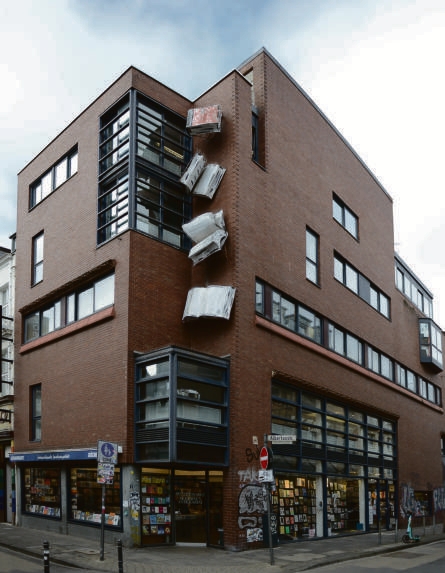
Walther König bookstore, falling book sculpture by Julia Opie
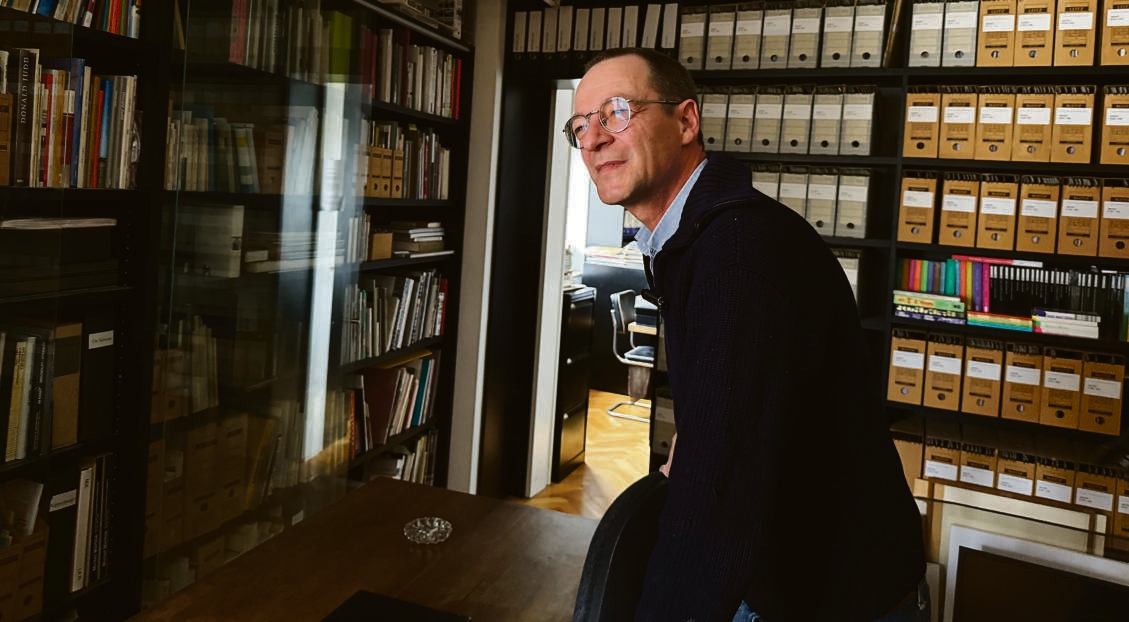
Franz König, photo Tomek Sierek
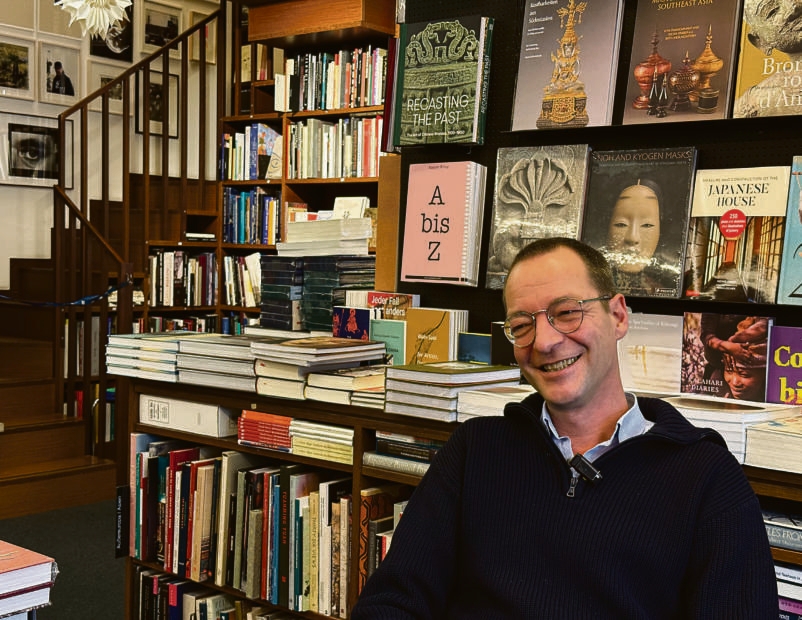
Franz König, photo Tomek Sierek
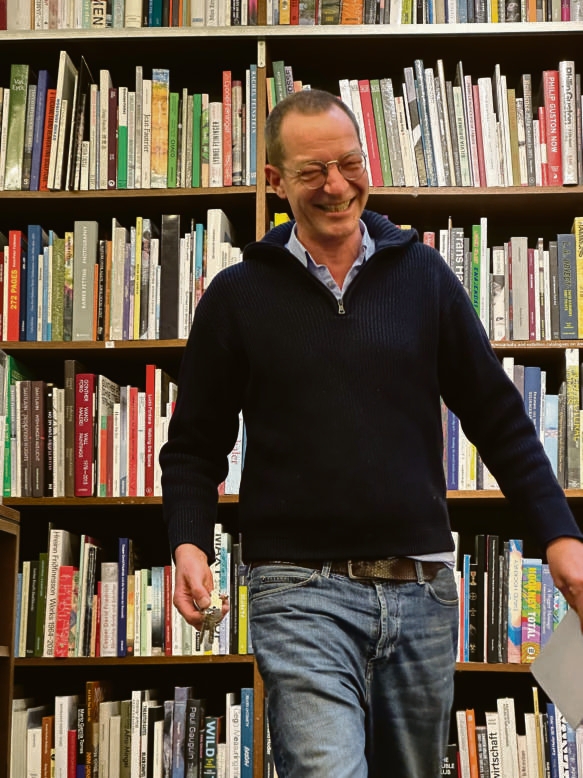
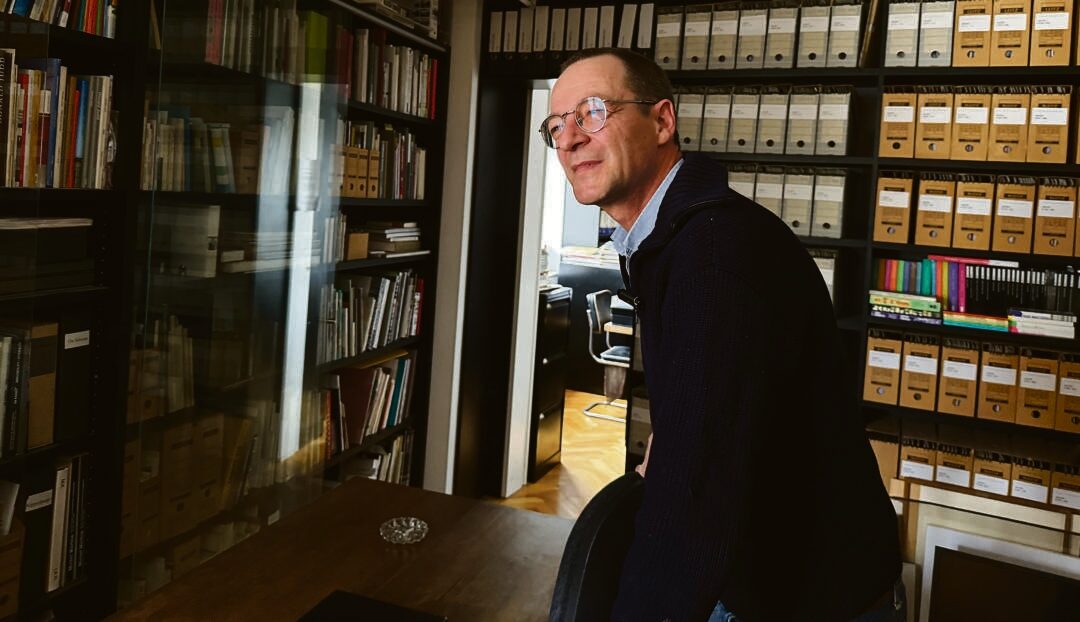
Franz König at Walther König bookstore, photo Uscha Pohl
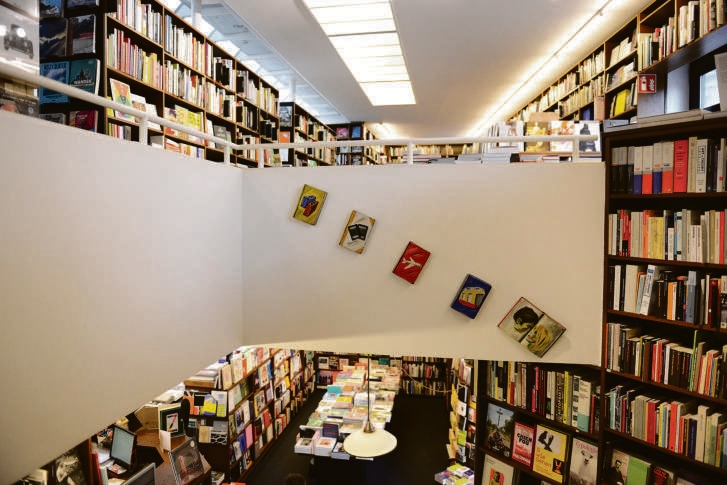
Walther König bookstore, Cologne
71
72
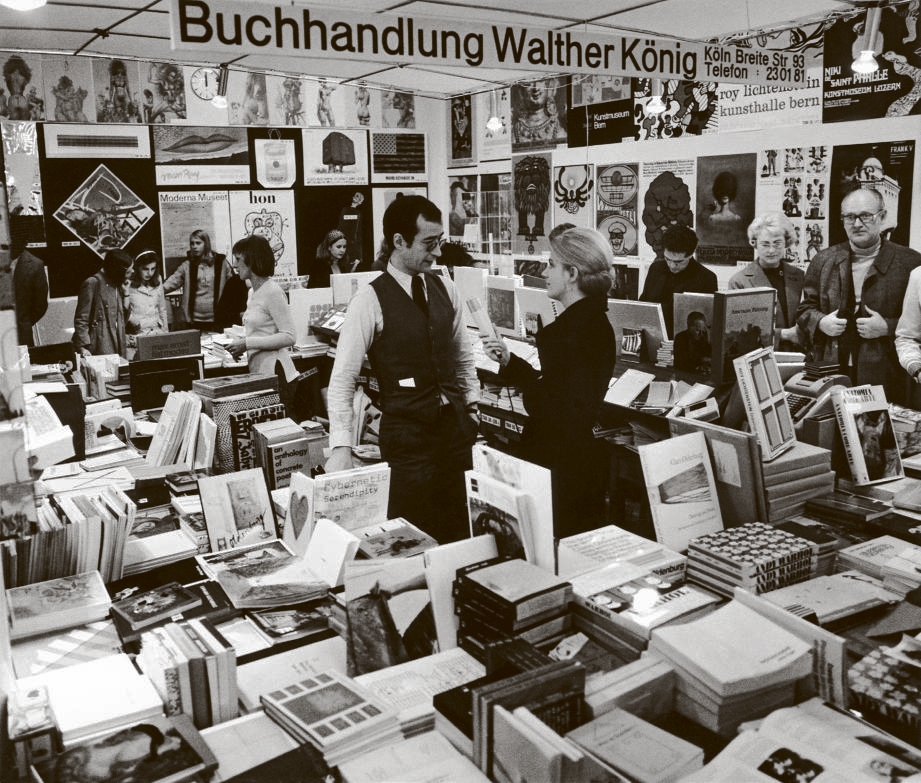
Walther König at Art Cologne in the ’60s, interviewed by the WDR
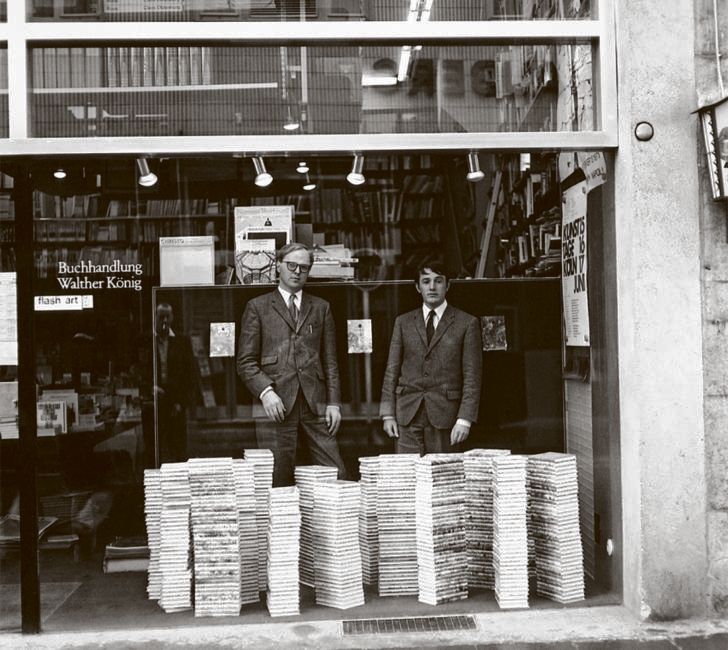
Gilbert & George, Walther König Bookstore
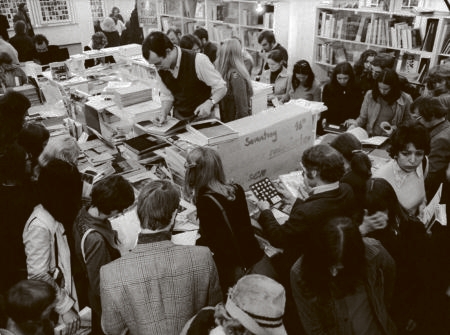
Walther König at Art Cologne in the ’60s
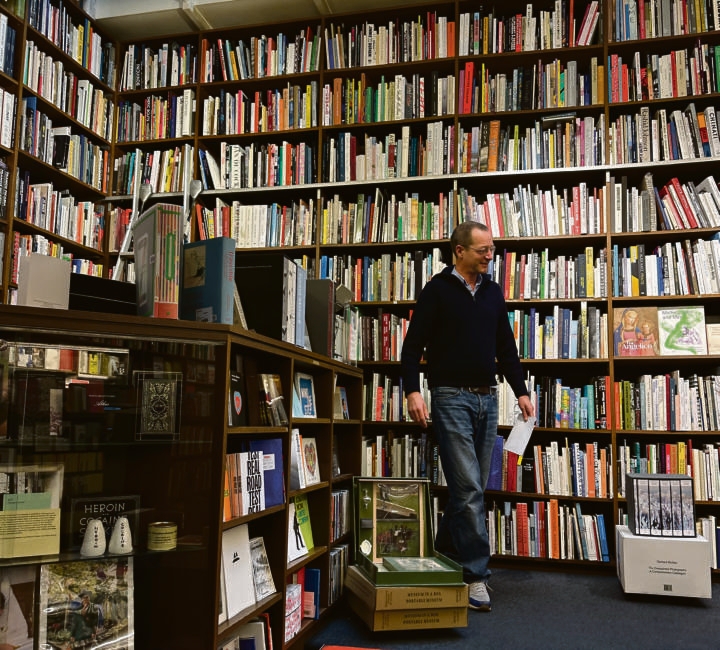
Franz König at Walther König bookstore, photo Uscha Pohl
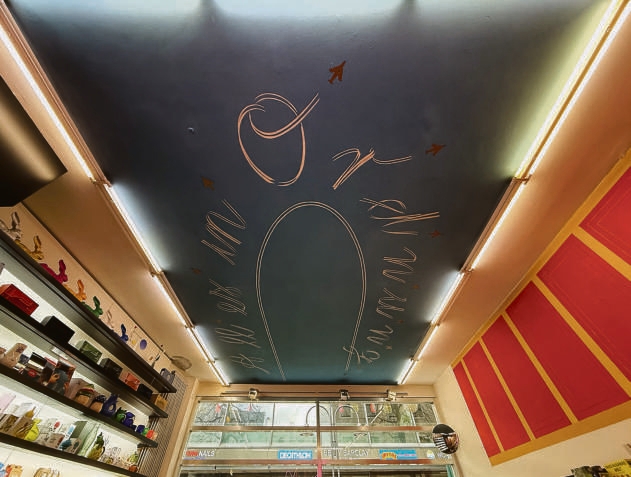
“Alles in Ordnung”, 1981. Thomas Schütte, Ceiling of the Walther König shop “Postkarten”
“At the end of my studies Julia Peyton-Jones, then director of the Serpentine, invited me and my colleagues to start running the Serpentine bookshop – a project which is continuing today and has expanded lately. I don’t even know when I returned to Cologne, the transition was so fluid.”
FAVOURITE BOOKS
“My favourite book is always the most recent one. Right now it’s ‘Selected Writings by David Chipperfield,’ – last year we published his big two volume monograph. It is our third monograph of his: every time one sells out he reassembles the contents and the next edition is published. This edition was one of the last projects of John Morgan who was teaching typography at the Düsseldorf Art Academy from 2016 until his passing in September. Such a legend – he was commissioned by the Anglican church in the UK to redesign the new testament!
Uscha Pohl