
High above the fortified citywalls lining the Parc de la Mar just along from the La Seu Cathedral, the exhibition banner “Rafa Forteza, Cámara de ecos” billows in the morning air draping from the balcony railings of Cas La Torre.
The historical palazzo serves as Palma seat and main headquarters of ‘Colegio Oficial de Arquitectos de las Islas Balears’ (COAIB), the Balearic Architectural Association. Home to a fantastic international architectural library, the COAIB also welcomes the public to two exhibitions per year, one opening for Palma’s ‘Nit de l’Art’ in September, while the winter exhibition is dedicated to artists based in Mallorca.
We are here to meet Esmeralda Gómez Galera. Gómez Galera, enterprising curator, writer and lecturer originally from La Mancha, Castilla, has been living in various places before moving to Mallorca a decade ago. Having curated the COAIB exhibition of Forteza, the renowned Spanish Arte Povera representative, she chose this formidable setting for our interview.
“The current focus of my curatorial practice concerns the relationship between the body, territory, movement journeys, traces and also the ephemeral and collective condition of exhibition making,” relates Esmeralda Gómez Galera.
“Rafa Forteza I have been friends and working together since 2016. I was living in Berlin when I first received a commission to write a catalogue text and this exhibition is actually a culmination of a ten year dialogue.”
“The name ‘Cámara de ecos’ (Echo Chamber) was taken from writings on Rafa’s studio wall which I noticed during a studio visit. We – Rafa and I – weren‘t sure if it was an intuition, a passing thought, an idea or a quote. The mystery around those words became the conceptual core for this exhibition which gathers almost 30 years of Rafa Forteza’s practice – mostly through sculptures from the 90s and also more recent paintings. The idea being an [echo]- chamber that holds memory, almost like an archive for Rafa‘s work.”
“There are three key elements in this exhibition: the act of wrapping, the presence of the circle in Rafa‘s paintings and the construction of an inner architecture within the exhibition space. The building has a very particular architecture – a strong, almost heavy presence. To respect the original architecture and play within an independent setting we created an ephemeral space within the exhibition room not using the original walls of the building at all. Well, almost: one small painting is placed on the outer walls, mirroring one on the interior architecture thus linking the body of work to the location connecting both structures.
“Rafa Forteza was born in Mallorca and today is based in Alaró, but has lived in various places across Europe. Earlier sculptures are from his time in Paris, later ones from Dortmund, Germany. In fact, he had to leave France quickly one day and it was almost an intuitive gesture of putting things together and different materials that were in his studio, almost like making a suitcase.”
“There‘s some plastics and bubble wrap – fabrics he used in the studio, even those used to cover the floor while painting. The thread cones were most likely disused remnants from a shoe factory where he used to have his studio. There is old clothes, fabrics, shoes, cans, cardboard tubes, blankets, some with a distinct Beuys feel to them. Each material is like a tiny piece of information of what was going on in the studio at that time. These sculpture’s origin lies in this spontaneous action, but the idea of repetition and ‘wrapping’ continued to fascinate him. The earlier pieces are from France and then in Germany something changed in a major way and all of his scupltures started to have a base, a sort of plinth, or ‘feet’ as Rafa likes to call them, which makes them easy to identify.”
“Rafa likes to tell this story that when traveling back to Spain, his sculptures piled in and on top of the car, a police officer stopped the car, enquiring, and passing the recommendation “you know, there‘s no need to bring the trash with you.”
“Rafa Forteza however was rightly convinced of the value of these sculptures proven by the fact that he was able to preserve them for over 30 years. They are an archive as well as time capsules creating a dialogue between different moments in life. Also, there is a multilayered ‘circularity’ in his oeuvre: circles of time, in the round objects within the sculptures, the circular wrapping movement, and the presence of circles in his more recent paintings. Also, one work for example was started in the 90s but was finished just before the opening, illustrating his very long processes and how he returns to earlier starting points, works and reworks, showing that the work never really finishes, rather is an ongoing process.”
“There is masks, smaller items with which we recreated a feeling of the studio.‘Vivimus a Muerte’ from 1997 is one of the few paintings that Rapha titled. Furthermore it is dedicated to Rafa himself while the title translates along the lines of ‘We are going through life with the (one) certainty that is death.’ In other words ‘mortality is something that can give meaning to life and to artistic creation.’”
Uscha Pohl
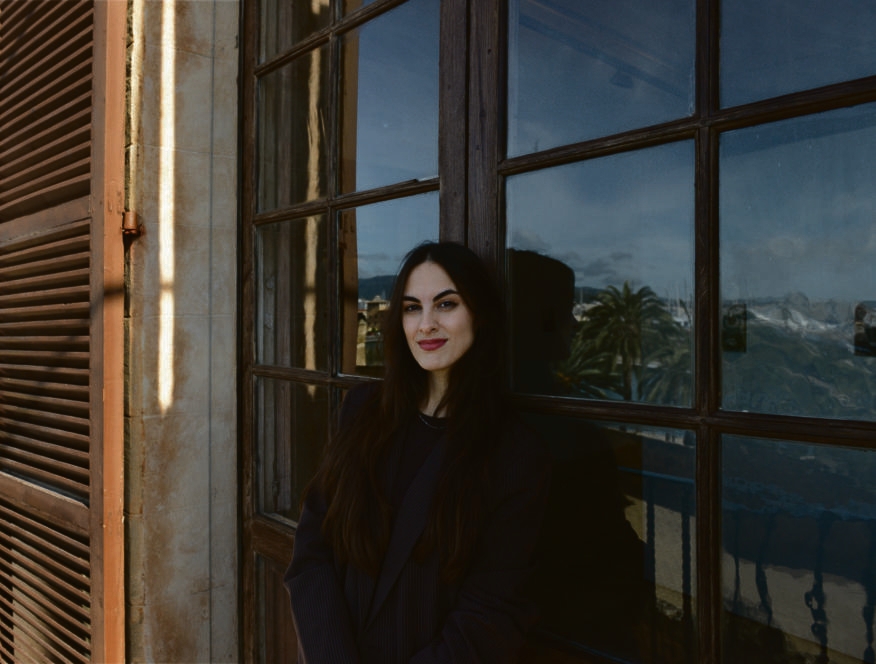
Esmeralda Gómez Galera, portrait Tomek Sierek
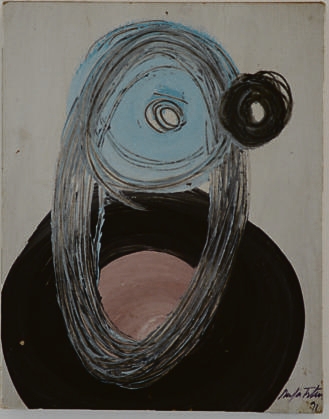
COLL VIII, 1991, Rafa Forteza
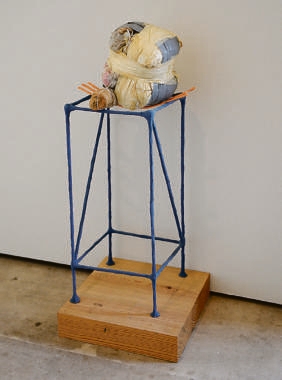
E-P-37,1991-2018, Rafa Forteza
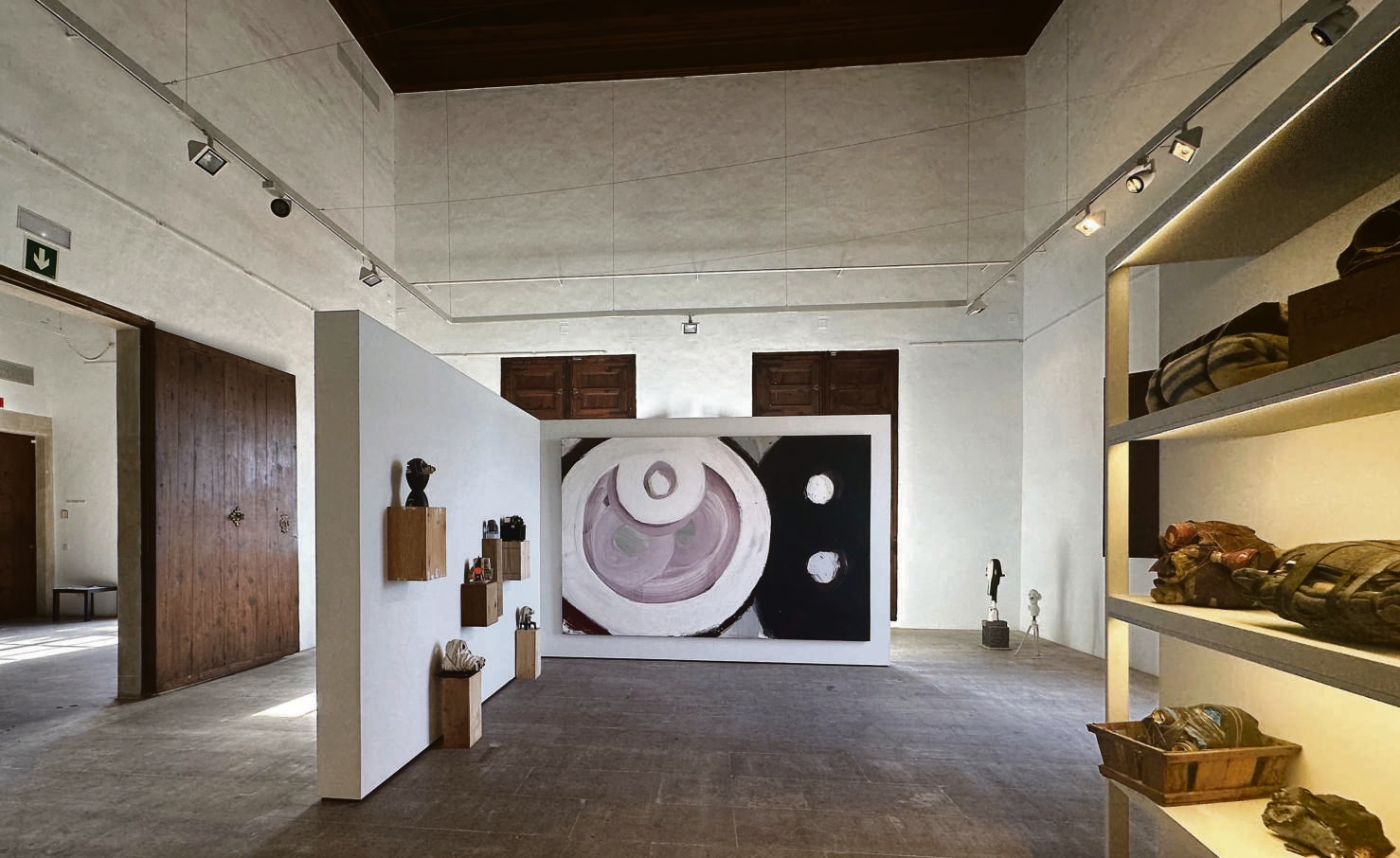
Cámara de ecos, Rafa Forteza, exhibition view, photo Uscha Pohl
Further exhibitions
curated by Esmeralda Gómez Galera
Melting Ice
“This exhibition is more playful and experimental but also addresses ephemerality, instability and fragility, thus both are conceptually connected. There‘s something in systems that are fragile and subject to change or that exist in transition that really interests me, both from a conceptual and relational perspective.”
Natalia Domínguez, Vera Mota, Claudia Pastomás, Álvaro Porras, Sasha Saari, Thom Trojanowski.
Balazsi Gallery
balazsi.com
Tirar de l’hilo / Pulling Threads
“The exhibition gathers artists working with textiles from a contemporary perspective. The concept relates to methodology for research, like following a line that can lead you somewhere, but at the same time ‘pulling a thread’ as gesture holds also destructive potential. This doublemeaning and how a simple act can make a whole system unstable – or come undone – underpins the exhibition.”
Amparo de la Sota, Elisa Pardo Puch, Eugenio Espinoza, Mano Penalva, Nestór García
Baró Gallery
barogaleria.com
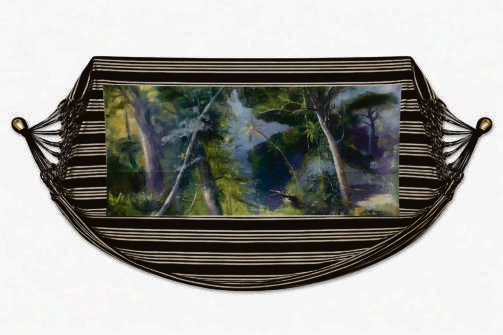
Recorridos que articulan relatos (Ferdinand Bellerman) II, 2025, Néstor Garcia, 130 x 250cm, oil on hammocks, from the exhibition Tirar de l‘Hilo, Baró Galeria
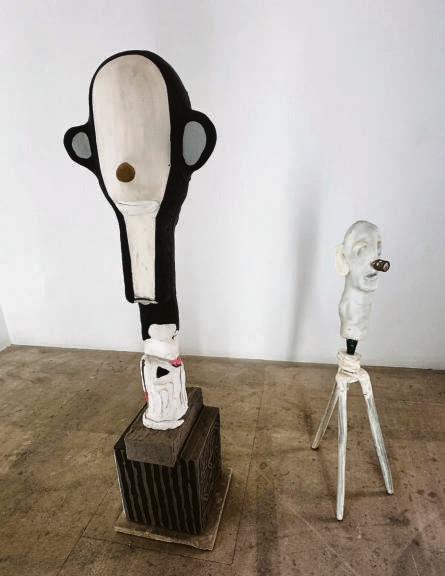
Rafa Forteza sculptures S.T., 2018, Acrylic paste, wood, seeds, stone, 100 x 28 x 23 cm and S.T. 2019, mixed media 80 x 12x 12 cm; photo Tomek Sierek
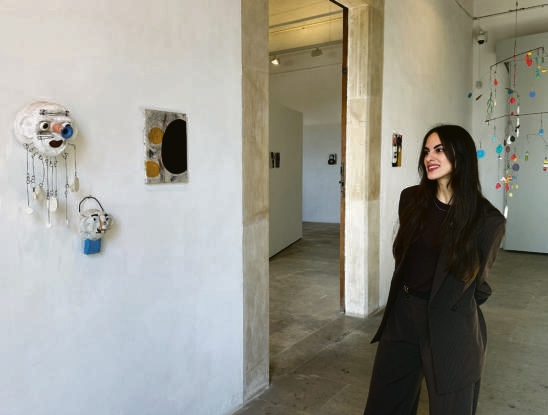
Esmeralda Gómez Galera, guiding through the exhibition, photo Tomek Sierek
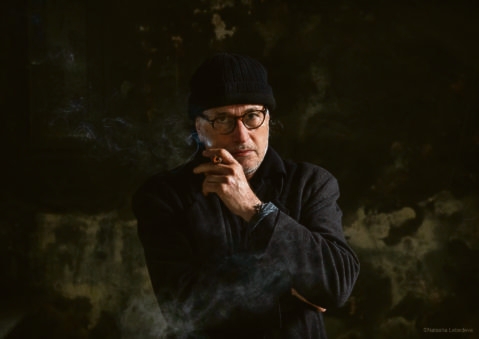
Rafa Forteza, photo Natasha Lebedeva
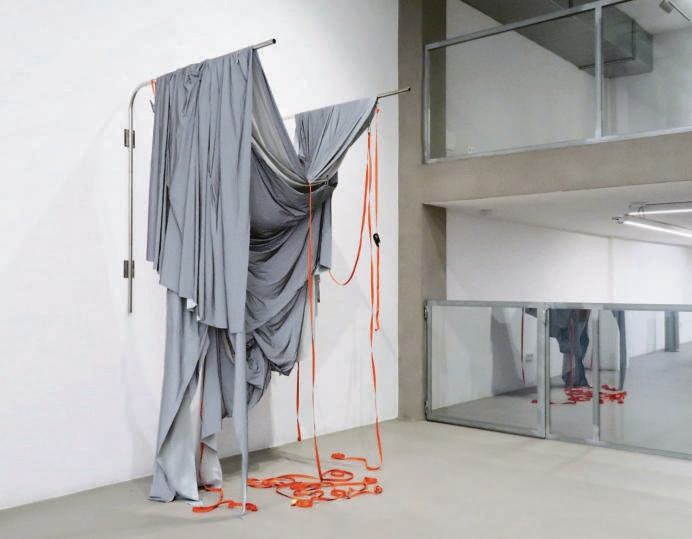
ST (Parachute) IV, 2024, Natalia Domínguez, reflective fabric, ropes, carabiners, pulleys, stainless steel tubes, steel cable; exhibition Melting Ice, Balazsi Gallery
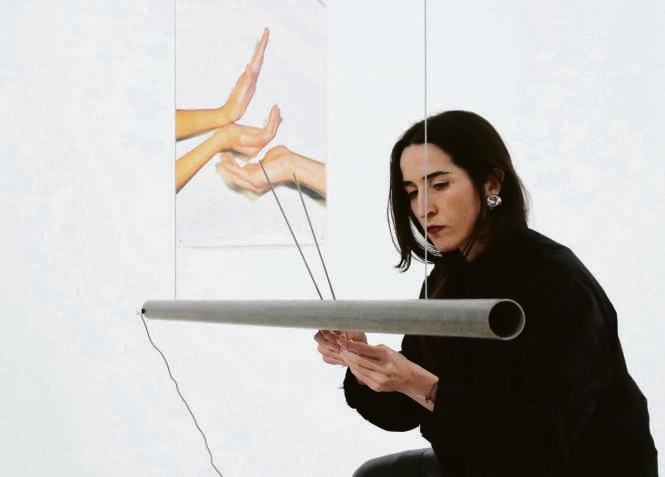
Performance Roer II (2026) by Vera Mota, photo Ana Mariya Stoyanova Piruleva
Cámara de ecos exhibition view photo Uscha Pohl; below right: Rafa Forteza sculptures S.T., 2018, Acrylic paste, wood, seeds, stone, 100 x 28 x 23 cm and S.T. 2019, mixed media 80 x 12x 12 cm; photo by Tomek Sierek; center: Recorridos que articulan relatos (Ferdinand Bellerman) II, 2025 130 x 250cm, Néstor Garcia, oil on hammocks, from the exhibition Tirar de l‘Hilo, Baró Galeria; below left to right: views of Melting Ice at Balazsi Gallery: ST (Parachute) IV, 2024, Natalia Domínguez, reflective fabric, ropes, carabiners, pulleys, stainless steel tubes, steel cable / Tela reflectante, cuerdas, mosquetones, carracas, tubos de acero inoxidable y cable de acero, 190 x 220 x 175 cm; performance Roer II (2026) by Vera Mota, photos Ana Mariya Stoyanova Piruleva