
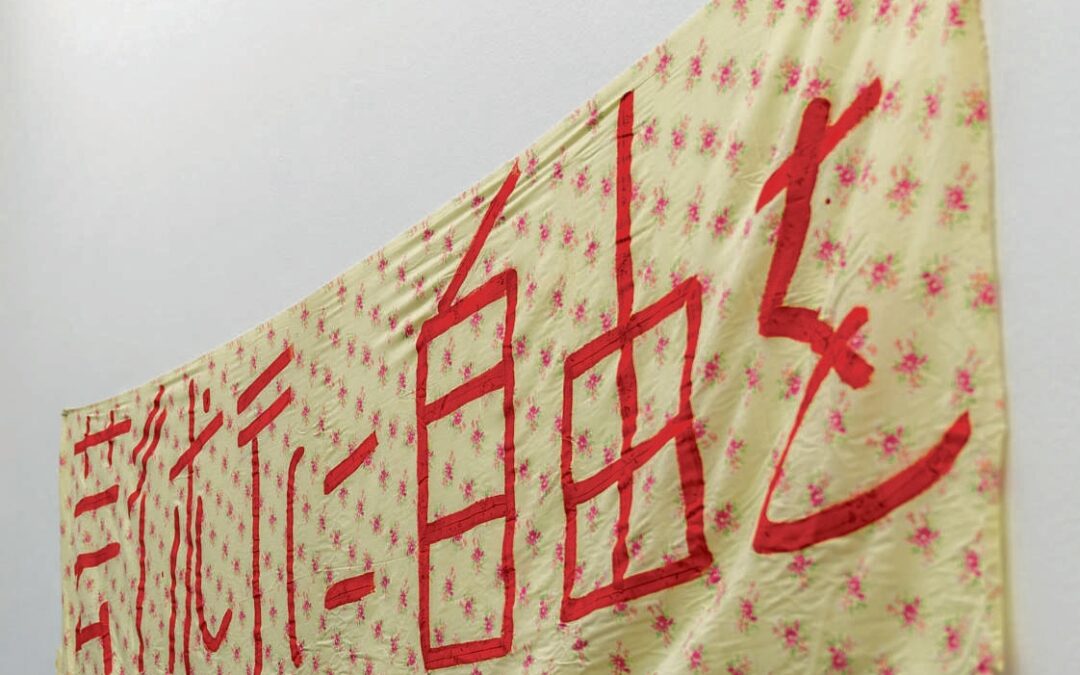
1969, Düsseldorf Art Academy: a student demonstration with Joseph Beuys in the front row. Erinna König‘s pastel-coloured floral banner bears a message in bright red Japanese lettering: ‘Freedom for Art’ it demands, linguistically encrypted. At first glance, the Schnittmuster series (Patterns, 1981–90) are pleasing to the eye, featuring cut-out children‘s undershirts, jacket hems and suit sleeves made of red tinted newspaper.
Upon closer inspection however, a centrally placed swastika above the newspaper headline “Rote Erde” (Red Earth) comes to the fore – dated 28 March 1945. The collage elements are now questioned and decoded with horror: “Rote Erde” was the regional newspaper of Westphalia, taken over by the NSDAP as a propaganda newspaper in 1933 and run as such until the end of the war. Translated into visual language, Erinna König‘s “Schnittmuster (Patterns)” series shows how party loyalty and one-sided views were “tailor-made” by the media for their willing readers.
Erinna’s work in the 80s may have contributed to processing the nagging postwar question ‚how could it happen?‘ Today, in 2026, this question has to be rephrased in the present tense. Fascism with its utter cruelty and madness has raised its head again. Freedom of art is once again under threat.
Uscha Pohl
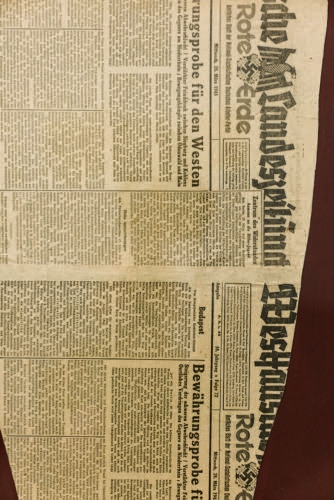
Schnittmuster / Rote Erde, Erinna König, of the ‘Patterns / Schnittmuster’ series, 1981–90
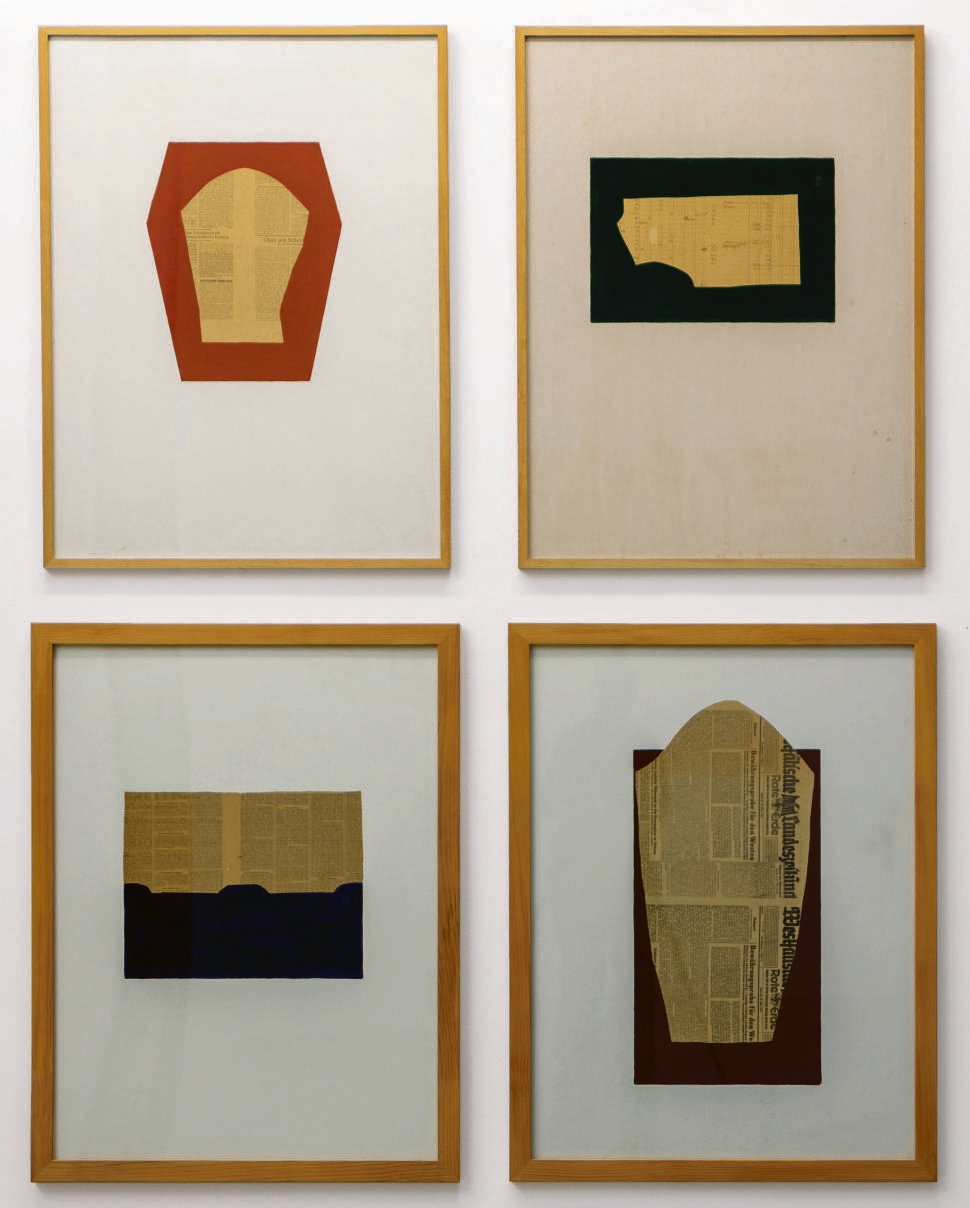
Four works of the ‘Patterns / Schnittmuster’ series, 1981–90, Erinna König
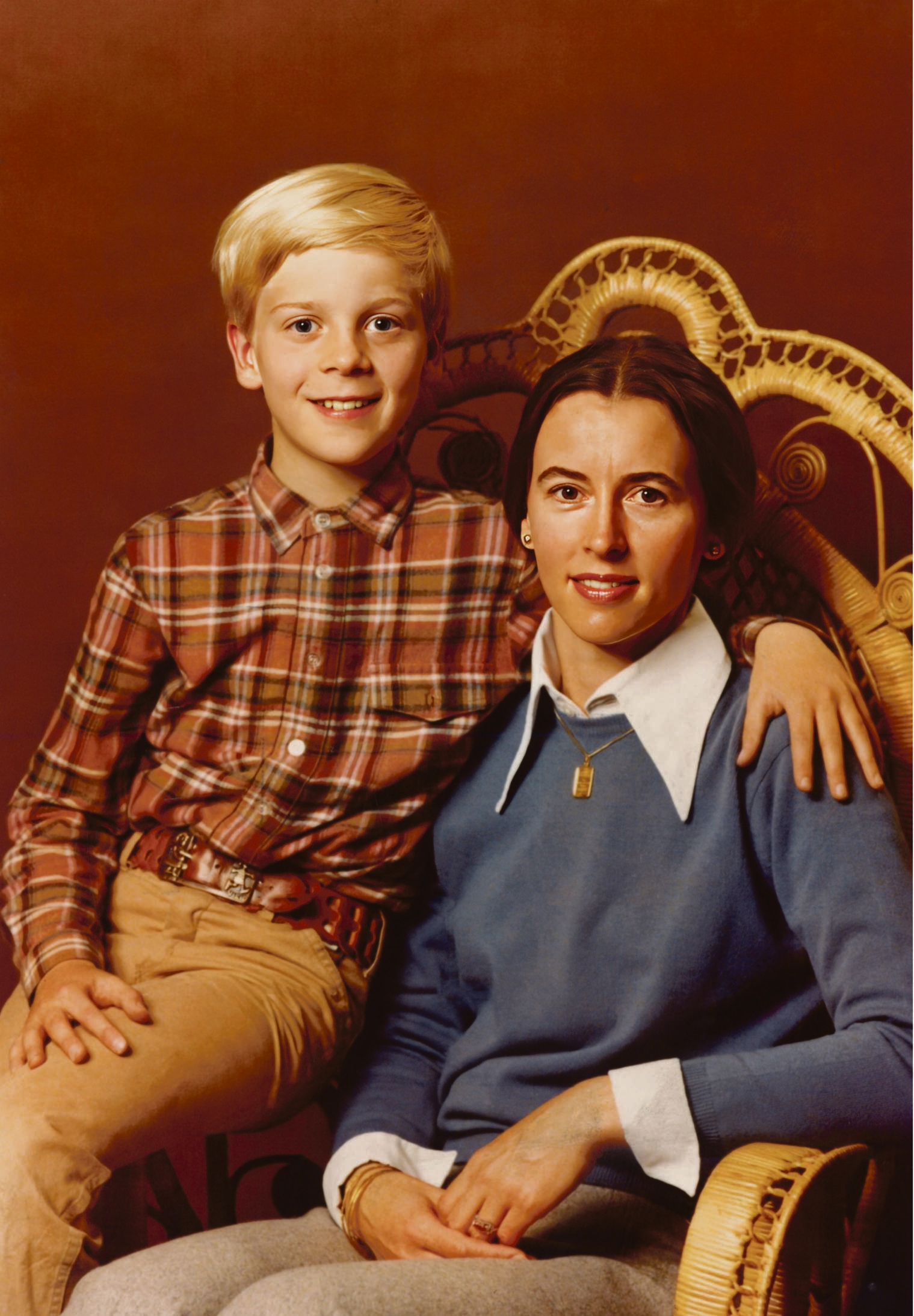
Greta & Cees, Together, 1979; Cees Krijnen
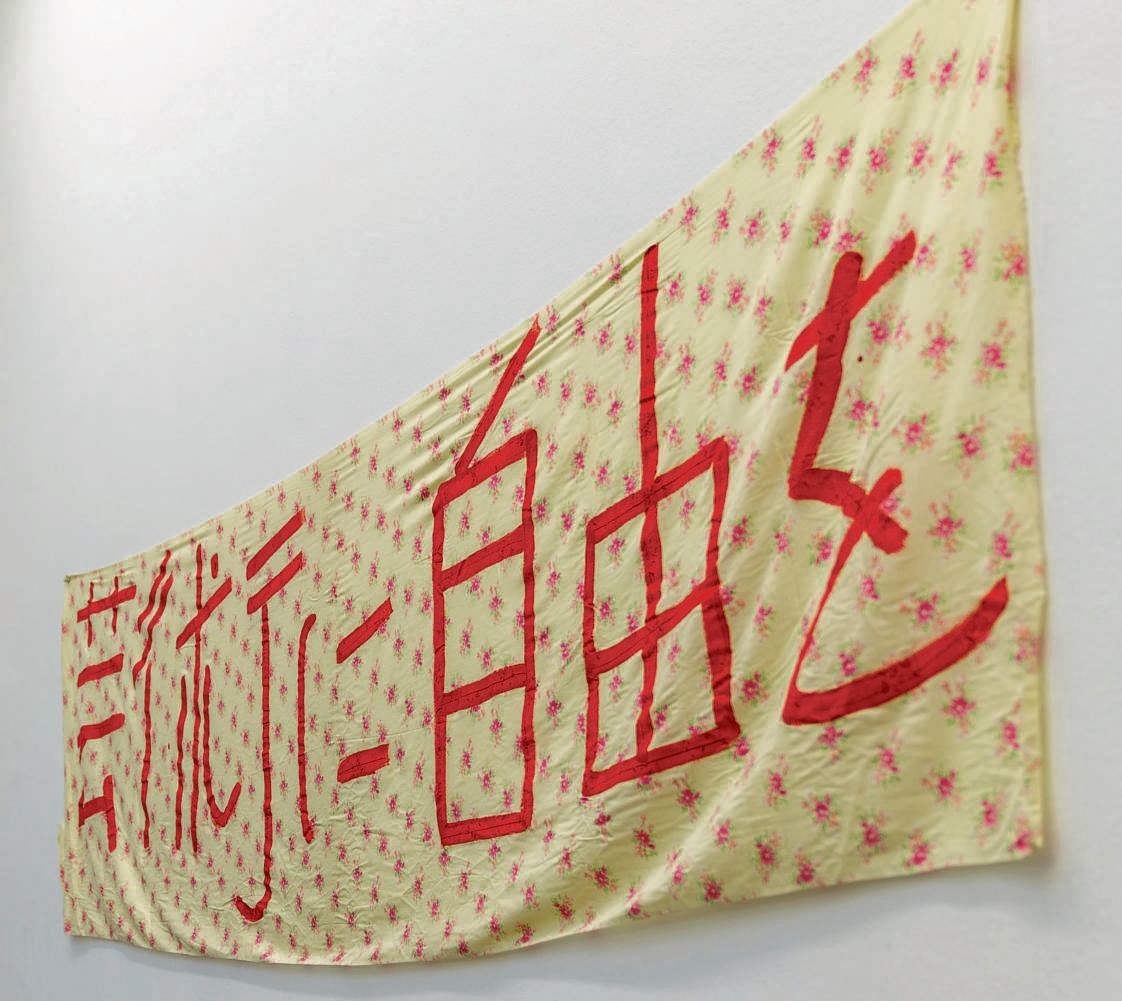
‘Freedom for Art’, 1970, Erinna König, banner of floral fabric, red ink writing, Japanese,
Freedom for Art / Freiheit für die Kunst, banner of floral fabric, red ink writing, Japanese, 1970, Schnittmuster / Patterns series, 1981–90, all works by Erinna König. Exhibition: MIRROR IN TIME, Michelangelo Pistoletto. Erinna König, Opposite page: Greta & Cees, Together, 1979;
Cees Krijnen, part of the exhibition S.E.L.F. — both at UP&CO @ EK STUDIO.