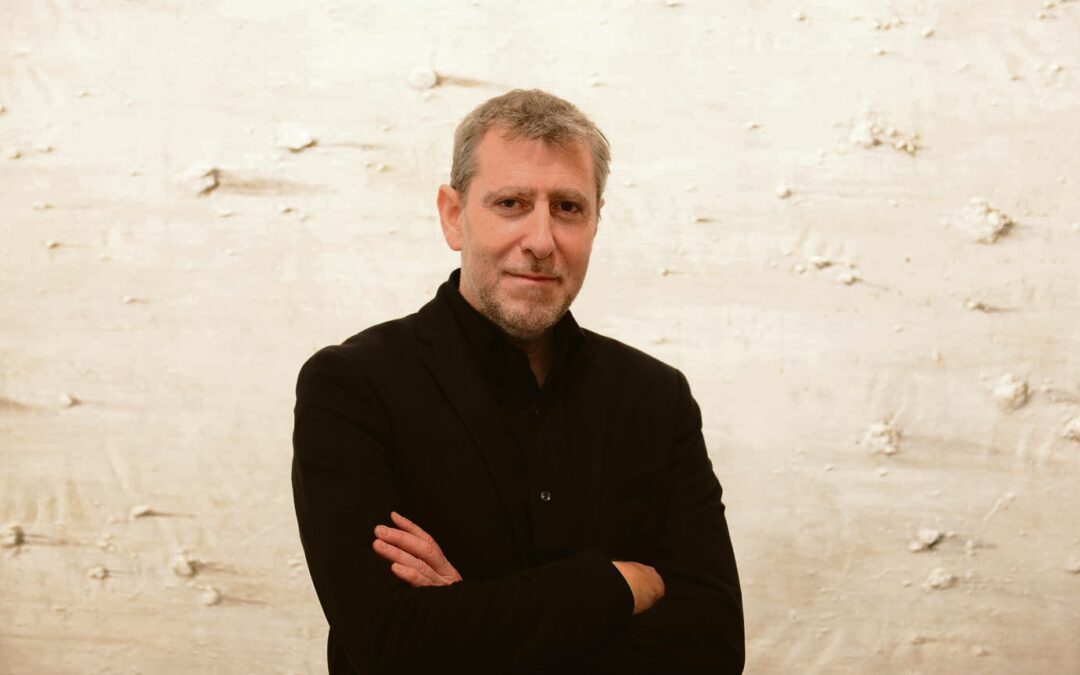
On a personal level, I would say that I am an easy-going person with a great sense of humor. Professionally, I am a committed advocate of contemporary art who currently directs one of Spain’s leading museums, Es Baluard Museu, which entails a great deal of responsibility. Before that, however, I worked in many different roles: I was an art critic for major media outlets such as El Cultural (El Mundo) and Lápiz magazine; I directed art magazines such as Arte y Parte, DARDOmagazine, and the Portuguese publication [W]art; I have curated dozens of exhibitions, many of them featuring important artists such as Jannis Kounellis, Jessica Stockholder, Julião Sarmento, Axel Hütte, Alex Katz, Günther Förg, Sandra Cinto, Julian Opie, Caio Reisewitz, and Berta Cáccamo; I have written essays on contemporary visual culture; and I have served as executive director of institutions such as the DIDAC Foundation (Santiago de Compostela) and the Luis Seoane Foundation (A Coruña). I also worked as an advisor to the Barrié Foundation, overseeing its International Contemporary Painting Collection.
I have also been the artistic director of major events such as the Sustainable Artistic Action Festival SOS 4.8 in Murcia, the Look Up! Natural Porto Art Show in Porto, and MadBlue, the summit on culture, science, and innovation for sustainable development in Madrid, which was recognized by the Spanish Government as an event of exceptional
public interest. In addition, I have had an academic career as a professor at the UCP in Porto (2001–2006), as lecturer in the Advanced Studies Master’s program at the University of Salamanca (2015–2024), and teaching in master’s programs at the Complutense University, Nebrija University, and Carlos III University.
I believe that having held so many different roles allow one to develop a global perspective and better understand those around you. For instance, it makes you more sensitive to issues that arise from public administration bureaucracy. Between 2018 and 2024, I worked as a strategic consultant for the Agencia Gallega de Innovación (Xunta de Galicia) as an advisor to the Design for Innovation and Sustainability Program 2024, aimed at incorporating design and artistic processes into the business world.
Throughout my career, I have curated international biennials such as the Porto Design Biennal and festivals connected to other disciplines, including the performing arts, such as Plataforma. Festival de Artes Performativas, where I served as co-director. Ultimately, my career has been fundamentally linked to the universe of contemporary art and design, as a curator, editor, writer, and artistic director, among other roles.
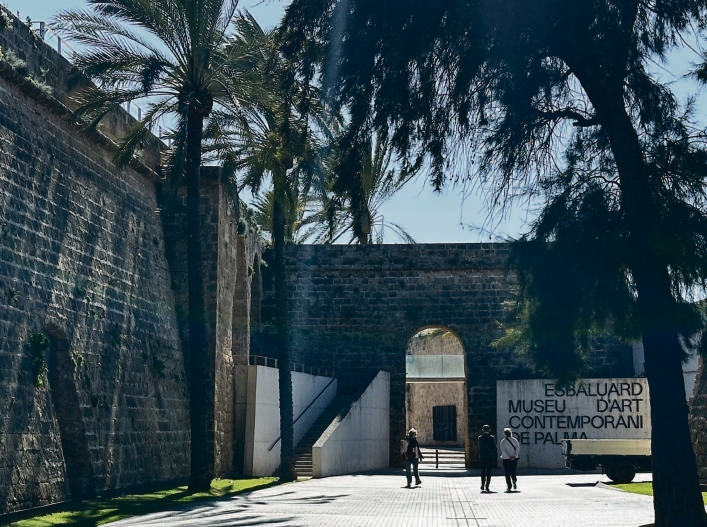
Es Baluard Museu is more than a museum because it has a triple identity that allows it to function as an exhibition center, the main hub for contemporary culture in the Balearic Islands, and a museum in the strict sense, with its collection at the forefront. This is no minor matter, since it allows any cultural discipline and its agents to consider Es Baluard as a reference point.
We work to become, and I believe we are succeeding, a highly empathetic museum, capable of interacting with a wide range of institutions and agents throughout the islands, building networks that project the cultural richness of Mallorca and the Balearic Islands in general through projects inside and outside the museum, such as Biennal B.
In 2025 we finalized more than thirty agreements and over one hundred collaboration contracts, which speaks to the museum’s empathetic dimension and capacity. We also co-produced exhibitions with a dozen Mallorcan institutions that had never before collaborated with Es Baluard in this way, such as Casal Solleric and CaixaForum, among others. In total, we produced or co-produced 20 exhibitions in 2025.
Beyond the numbers, Es Baluard is an inclusive and a feminist museum, especially in 2026, when we will continue supporting women curators through Espai D and promoting women artists. In fact, a total of eight invited women curators will work with the museum this year, in addition to the curators from Es Baluard’s own team and those involved in Biennal B. In 2026, by a happy coincidence, all the exhibitions we will inaugurate this year are by women artists, something that happened organically rather than through imposed quotas.
At the same time, Es Baluard is a museum deeply committed to its context. We aim to lead cultural awareness toward sustainable development and to promote the transformative power of art. It is a collaborative and diverse museum in its initiatives, with a strong capacity for impact thanks to the very active work of our education department. It is also a museum capable of expanding far beyond its walls and striving to remain accessible without sacrificing intellectual rigor and formal excellence.
This empathetic quality and the way we are developing the museum’s positioning and brand identity is reflected in the fact that the number of Members of the Museum has more than doubled over the past two years, and our shop and bookshop continues to grow. There has also been a significant increase in visitors and ticket revenue, demonstrating how Es Baluard is becoming an essential cultural destination thanks to its prestige. What I like most, however, is that Es Baluard is a museum where people enjoy spending time, and the duration of the visit continues to grow as people stay longer both inside and around the museum.
Es Baluard Museu d’Art Contemporani de Palma has an important contemporary art collection and a history of exhibitions and activities that have promoted knowledge, heritage dissemination, and the development of art and culture, particularly within the Balearic Islands.
The promoters of the Fundació Es Baluard Museu d‘Art Contemporani de Palma -Govern de les Illes Balears, Consell de Mallorca, Ajuntament de Palma and Fundació d‘Art Serra-, its founding president Pere A. Serra Bauzá, its successive directors and its professional team, have made an effort to consolidate the Museum and open it up to current debates, in line with other artistic institutions and laying the foundations for tackling a series of essential objectives in the coming years as a benchmark for national and international contemporary art and a fundamental institutional pillar of Balearic culture. Es Baluard Museum has hosted exhibitions by artists with significant international careers and big names in national and Balearic art.
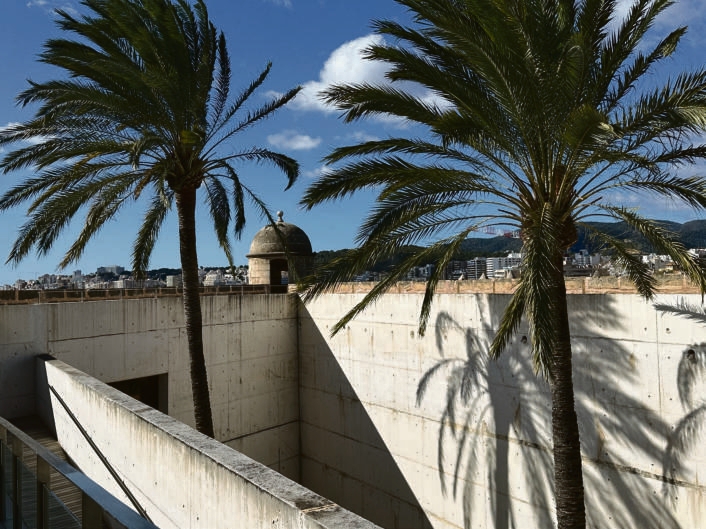
Portrait David Barro by Tomek Sierek,
photos Es Baluard, Uscha Pohl, drawings Jan Höhe
Since my arrival in 2024, I have had the opportunity to program exhibitions by major artists such as Carlos Garaicoa, Jessica Stockholder, Eugenio Dittborn, Sandra Cinto, and Joan Miró, in a large joint exhibition across four venues made possible through collaboration with the Government of the Balearic Islands and the Palma City Council.
In 2026, Es Baluard Museu will present an ambitious exhibition programme with a strong commitment to contemporary creation, particularly from perspectives developed by women artists at both international and local levels. Among the main highlights are Ghada Amer, Jannis Kounellis, Fiona Rae and Ester Partegàs, all key figures on the international scene. The last three will occupy different spaces in the museum during Art Cologne Palma Mallorca.
Naturally, we also pay special attention to artists from the Balearic context, such as Aina Albo Puigserver, popea, Mar Guerrero (with a joint project with Anna Talens at IVAM as part of the cycle «Territorios en tránsito»), and Marta Armengol, thereby consolidating the museum’s commitment to the local creative ecosystem.
This year the museum is also strengthening its presence beyond its walls through four exhibition projects carried out in collaboration with national institutions such as IVAM – Institut Valencià d’Art Modern, with the group exhibition A media lumbre (co-produced with Casal Solleric) and the cycle «Territorios en tránsito»; CA2M – Centro de Arte Dos de Mayo, with the exhibition by Ester Partegàs; and CGAC – Centro Galego de Arte Contemporánea, with the project dedicated to Jannis Kounellis, inaugurated last December. With all this, the museum’s collection will continue to play a central role following the reopening in 2025 of a permanent gallery.
All of this is reinforced by the museum’s educational work and public programmes, through which it deepens its mission of becoming a space for learning, critical thinking and social encounter. The museum will continue to encourage the participation of diverse communities -educational centres, families, young people, older audiences and social groups- while expanding its commitment to accessibility, sustainability and social impact.
Of course, we will also continue one of our flagship initiatives, Biennal B, developed in collaboration with the Consell de Mallorca, one of the transformative pillars of the museum’s new model. The project will continue to unfold throughout 2026 through multiple lines of action: conferences, workshops, exhibition projects and collaborative initiatives connecting art, territory, craft and contemporary social practices. These projects, carried out beyond the walls of Es Baluard Museu, propose unprecedented collaborations with other Balearic institutions. The year began with the 1st International Congress of Art, Culture and Science, which brought together leading voices from both fields at a time when the boundaries between art and science are becoming increasingly permeable.
One of the things that struck me most when I arrived in Mallorca was the large number of women curators who were playing a key role in energising and projecting the island’s artistic scene. It is something rather singular, and I soon connected with the work that curators such as Neus Cortés, Magdalena Aguiló and Pilar Ribal had been carrying out for many years, as well as with the history of women directors at Es Baluard Museu and its current team, including Soad Houman, Jackie Herbst and Pilar Rubí. To this must be added a very well-prepared new generation that is calling for this situation to be made visible and supported. It is not a question of quotas, but of justice. That is why, in Espai D, we decided to commit to a series of women curators in order to grant that space a certain degree of autonomy. I like relinquishing a little control over the programme, and I believe it is a way of giving the museum freshness and diversity. In 2026 it so happens that all the museum’s projects will be led by curators such as Carolina Grau, Bea Espejo, Blanca de la Torre, Cristina Anglada, Sofía Moisés, Alicia Ventura, Clara Garau and Ela Spalding. At the same time, we will continue working on other projects with curators such as Raquel Victoria, Esmeralda Gómez Galera and Aina Pomar, and I am sure that we will gradually incorporate many more. This does not mean that there will not also be male curators, of course there will be.
The museum must function as a platform for momentum and as a support structure for these curators, who enrich the context and introduce new ways of working. The museum should serve as a vehicle for the national and international projection of talent, and while the presence of women artists at Es Baluard has long been common, the invitation of external women curators had not been so frequent. In this new phase we want to firmly support this generation of curators and theorists who are working with rigour, freshness and great intellectual demand.
In addition to the mission of conserving, studying, disseminating and expanding the Es Baluard Collection, there is also the need for it, or at least part of its holdings, to be displayed on a permanent basis so that it can serve as the axis from which to recount and explain the history of art, functioning as a tool for knowledge, research, theoretical production and communication, and contributing to the projection of Balearic cultural and artistic values in relation to the wider world.
Es Baluard Museu d’Art Contemporani de Palma holds an important collection of more than 850 works. Its initial core is formed by the donation and deposit of works from the Fundació d’Art Serra and its founding president Pere A. Serra Bauzá, together with works deposited by the Ajuntament de Palma, the Consell de Mallorca and the Govern de les Illes Balears, as well as a series of later acquisitions, donations and deposits made by artists, collectors and other institutions.
Promoting the improvement and expansion of the museum’s collection is an essential task. For this purpose, Es Baluard Museu has an acquisitions committee that studies and assesses the proposals for purchases, deposits and donations that are presented, taking into account the various focal points of the collection as well as its absences, with the aim of shaping a coherent discourse capable of working simultaneously with Balearic, national and international art.
The collection begins with a group of works from pictorial modernism at the end of the nineteenth century and the beginning of the twentieth century, as well as a number of key artists from various avant-garde movements. From the trends that emerged from the 1960s onwards, it becomes increasingly extensive until reaching the present day. One of the most numerous and significant cores of the Es Baluard Collection introduces us to the history of painting, with highly relevant works by Joaquín Mir, Joaquín Sorolla, María Blanchard, Fernand Léger, Joan Miró, Antoni Tàpies, Miquel Barceló, Luis Gordillo, José María Sicilia, Ferrán García Sevilla, Juan Uslé, Miriam Cahn, Helmut Dorner and Peter Halley, to which works on deposit by artists such as Angela de la Cruz, Jessica Stockholder and Shinique Smith will also be added. For this reason, one of our interests in recent acquisitions and donations is to reinforce and update this legacy. This core was exhibited in parallel with the development of the first part of the trilogy Nachleben, focused on painting as conceptual art, during 2025 and part of 2026.
Another of the strong cores of the Es Baluard Collection corresponds to a series of works that embrace the performative from other media and disciplines, predominantly through photography and audiovisual practices. This particularity allows the collection to stand out and specialise in the field of the performative, and we aim to incorporate some works that originate in performance, such as the works by Fermín Jiménez Landa and Valeria Maculan recently acquired at ARCO, or even to incorporate performances themselves into the collection, which could then be activated within the museum.
For my part, I wish ART COLOGNE PALMA MALLORCA the very best of luck. Their success will also be the success of the galleries in our context, of their artists, and ultimately of Balearic contemporary art. I believe that the quality of an art fair is measured by the quality of its galleries and by its capacity to move the market. An art fair should never forget that. Everything else is just fireworks.