
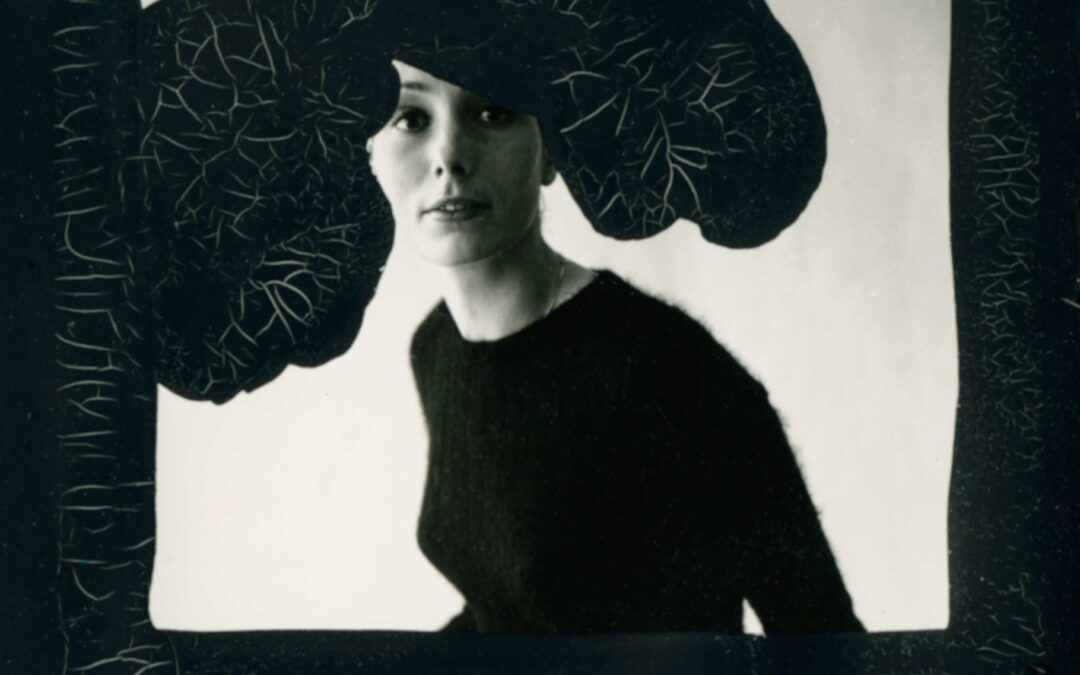
Renowned for her eloquent translations of the intrinsic into form, German artist Erinna König (1947–2021) presented semantics through aesthetics. Having made the concept of ‘social sculpture’ her own while masterstudent of Joseph Beuys, her sculptural paintings are skillful compositions full of beauty and marvel, inherently deep and witty.
Turning objects into ‘subjects’ Erinna König acts as stage director and set designer rolled into one; staging her work like a play with characters, she placed her actors, (subjects) composed from found objects in a reciprocal resonance setting.
“For me, Erinna König is a magician when it comes to transforming things. She often works with found objects, whatever she touches is transformed from an object into a being. As she does so, it sparks all kinds of hidden meanings in our minds, setting our association machine in motion. — Erinna König was an artist-artist, someone whom many in her inner circle referred to. In her lifetime she remained an insider tip, but that is looking to change [with the retrospective at the von der Heydt Museum],” says Dr Roland Mönig, director of the von der Heydt Museum, Wuppertal, in a WDR televised interview when hosting Erinna König’s first posthumous retrospective in 2023/4.
Enrolling in the Düsseldorf art academy in 1967, König first studied stage design under Teo Otto, Bertold Brecht’s set designer, then graphic design under Diter Rot before entering the masterclass of Joseph Beuys. She equally studied Judaism, comparative religious studies and East Asian art history (focus China), in Cologne and Bonn. This cultural interest tied in with her social engagement. Back at the art academy she became co-founder of the ‘Rote Zelle Kunst in Raum 13’ (Red Cell Art in Room 13). Off-site office she ran an office for socio-political activities — ‘Büro Olympia’ (Olympia Office, 1970- 72)— together with Henning Brandis, Chris Reinecke and Jörg Immendorff.
Joseph Beuys was breathing a new spirit into the academy. Social activities, happenings, actions, multifold discussions – and arguments – were part of the Beuys class and beyond. A hot topic was ‘to paint or not to paint.’ Finding this discussion futile König herself spent more time in the wood workshop instead looking for her own solutions.
“When it came to colours, everything was brownish, gloomy, the papers yellowed. There was wax paper, grease stains, and everything seemed a bit old-fashioned, antiquated. I had to try hard to find the revolutionary seeds in it.” (1)
Taking art to the streets, painting murals, addressing the public was one way of escaping the boundaries of classic art institutions — the use of postcards was another. König and Henning Brandis, fellow Beuys student and her husband at the time, regularly overpainted postcards, sent them to friends and family to re-collect them after – under the names of their alter egos ‘Maria and Josef Pinkerton’. Another project saw Erinna König and colleagues print postcards to be sold at the cash desk of the art association – as if it were a normal museum store. The series “Heimatkunde” (“local history”) in later years saw König dedicate a whole body of work to postcard art.
Political engagegement included campaigning and protesting — against the Vietnam war, the commercialization of the Olympic games Munich 1972 and skyrocketing rents — for which the project ‘Rentersolidarity’ (Mietersolidarität) was born. Outside the academy the König/Brandis and Reinecke/ Immendorff team were working from their action headquarters ‘Büro Olympia,’ a disused kiosk in the oldtown; within the academy the students fought for a student parliament, to which Erinna König then was elected first president.
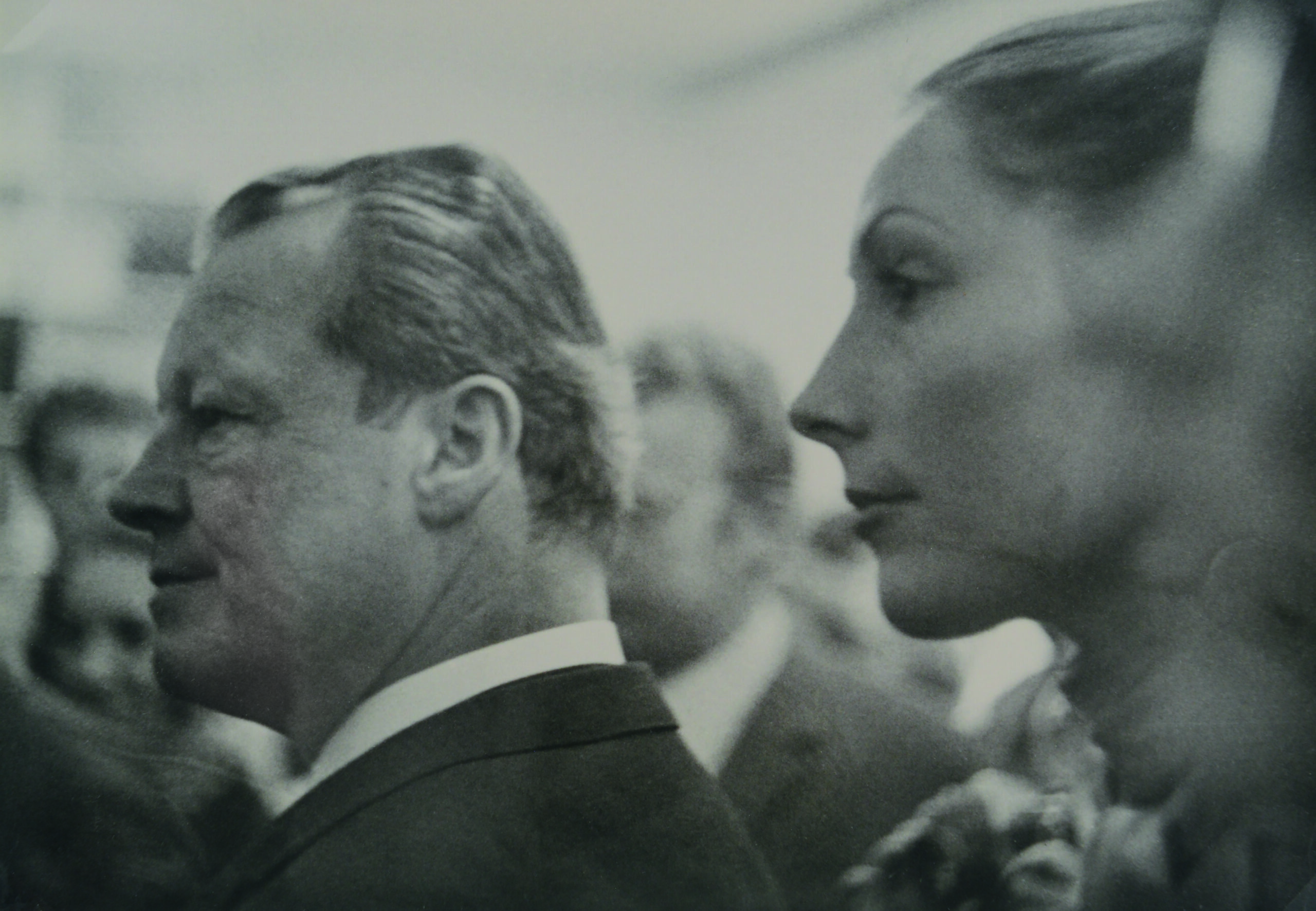
Erinna und Willi Brandt, Dorrtmund 1971, photo Jörg Immendorff, Büro Olympia
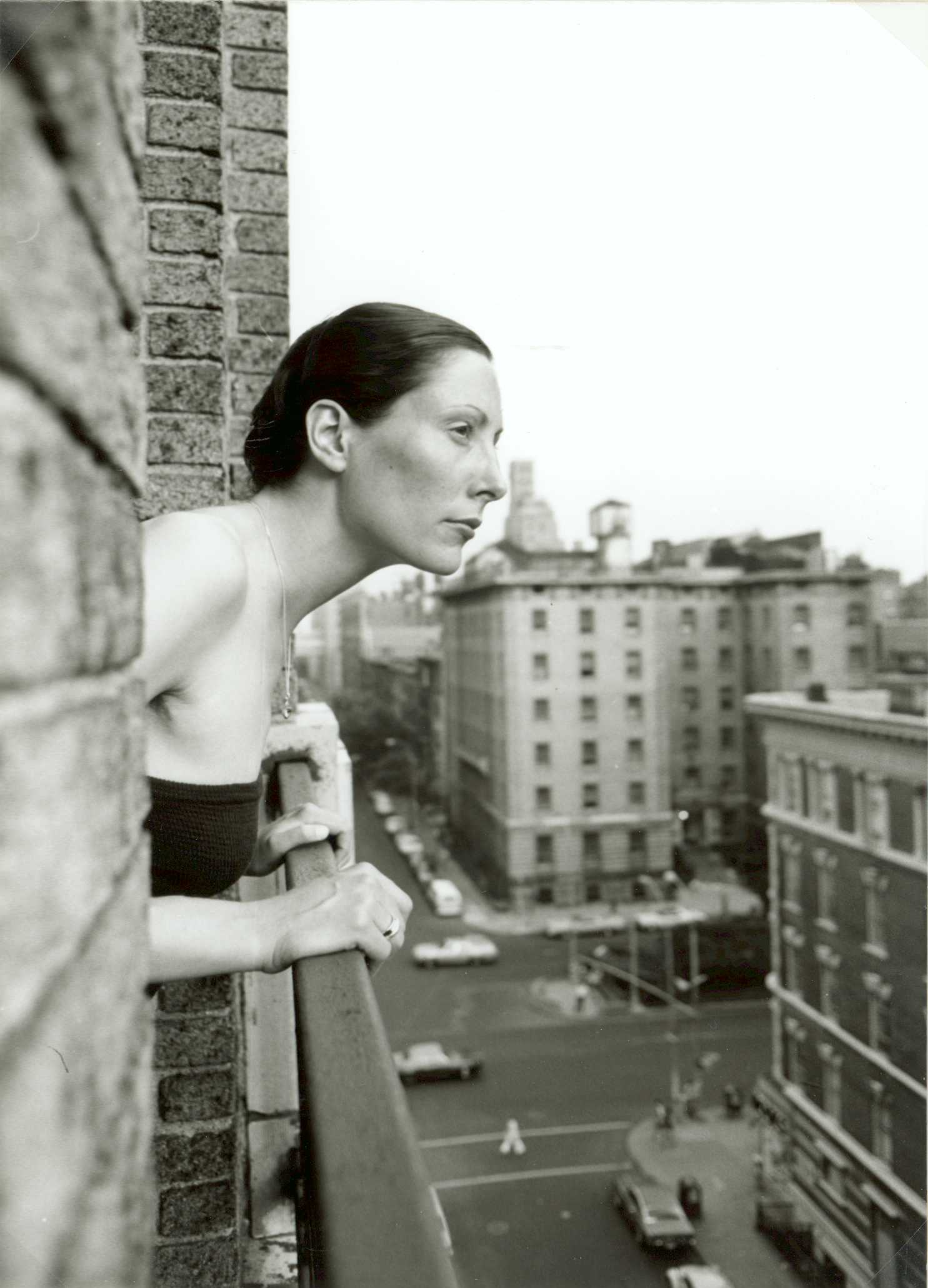
Erinna New York photo Henning Brandis
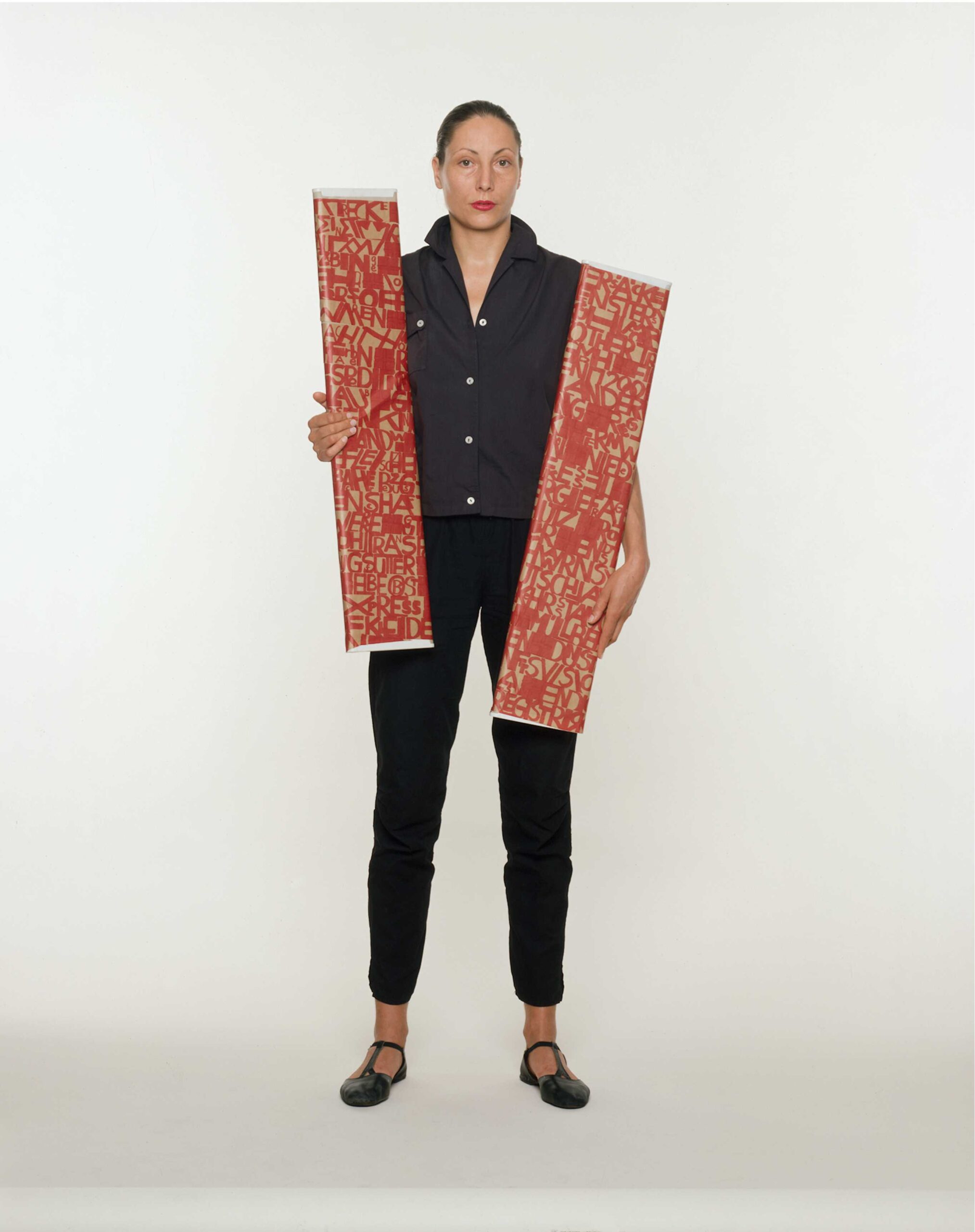
1982 Selbstportrait mit Rote Zeichen Durststrecke
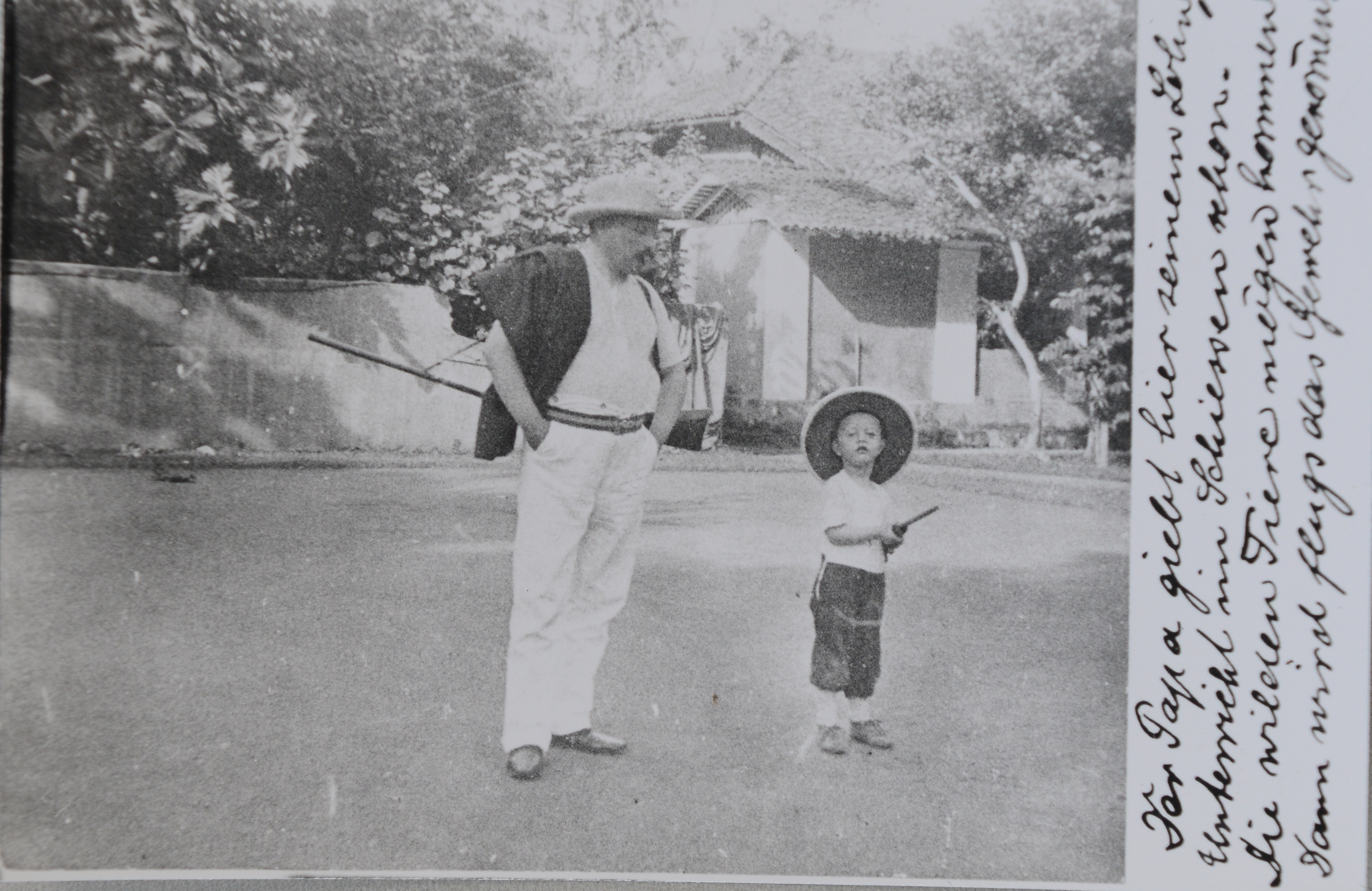
Filmstill “Oskar B or The Imperialism”, 1974, Erinna König, father teaching Oskar to shoot
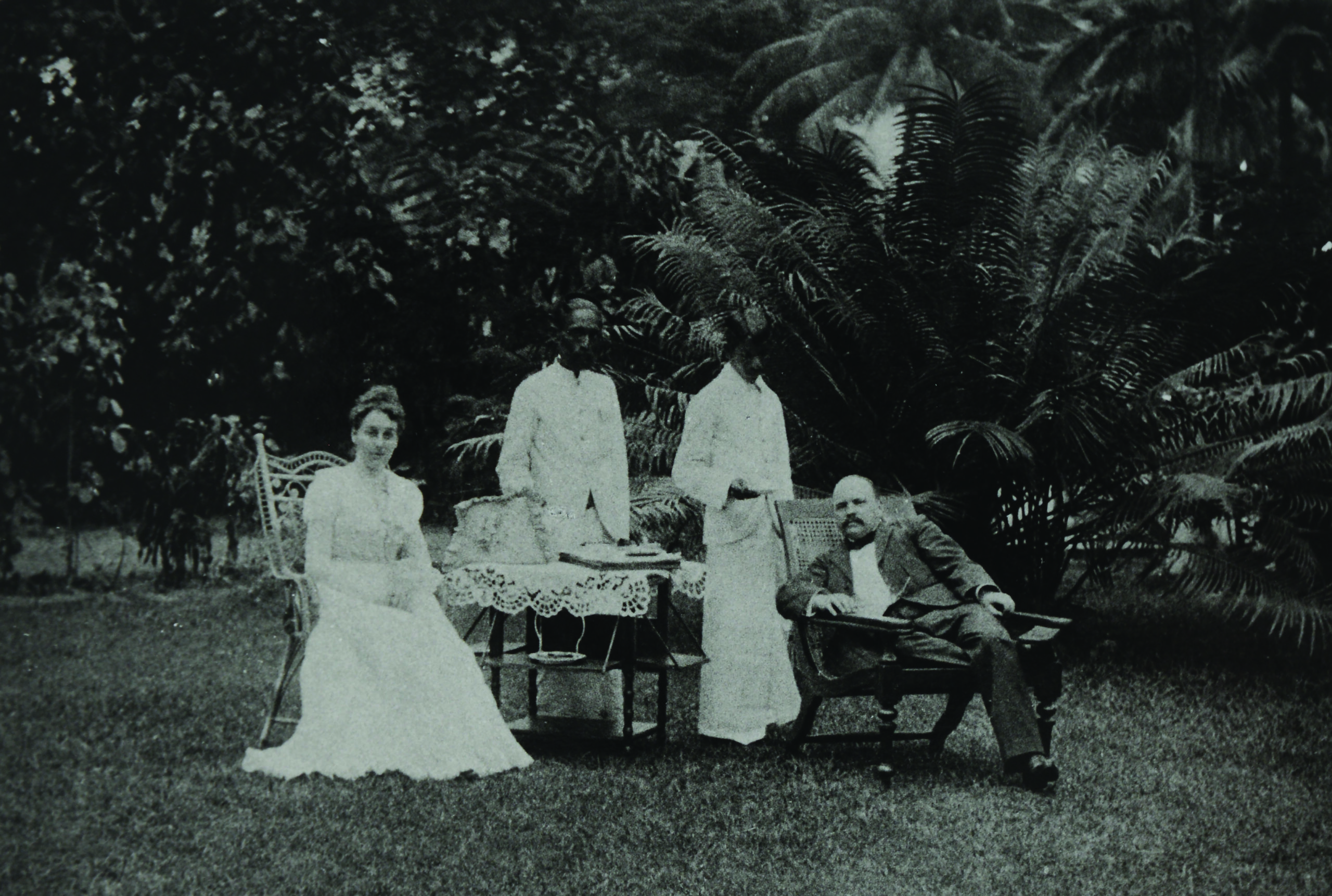
Filmstill “Oskar B or The Imperialism”, 1974, Erinna König, family group image
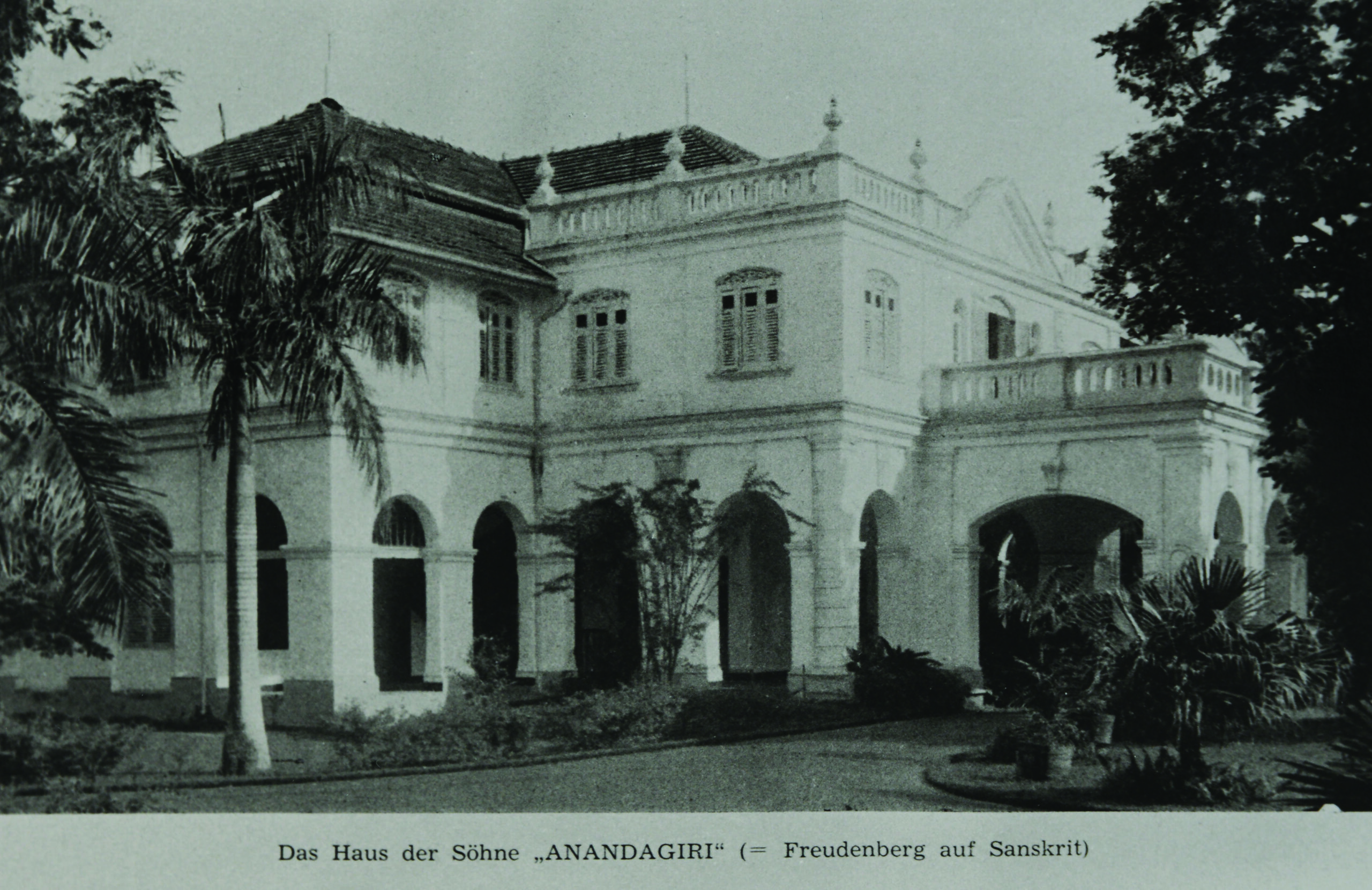
Filmstill “Oskar B or The Imperialism”, 1974, Erinna König,Freudenberg Villa
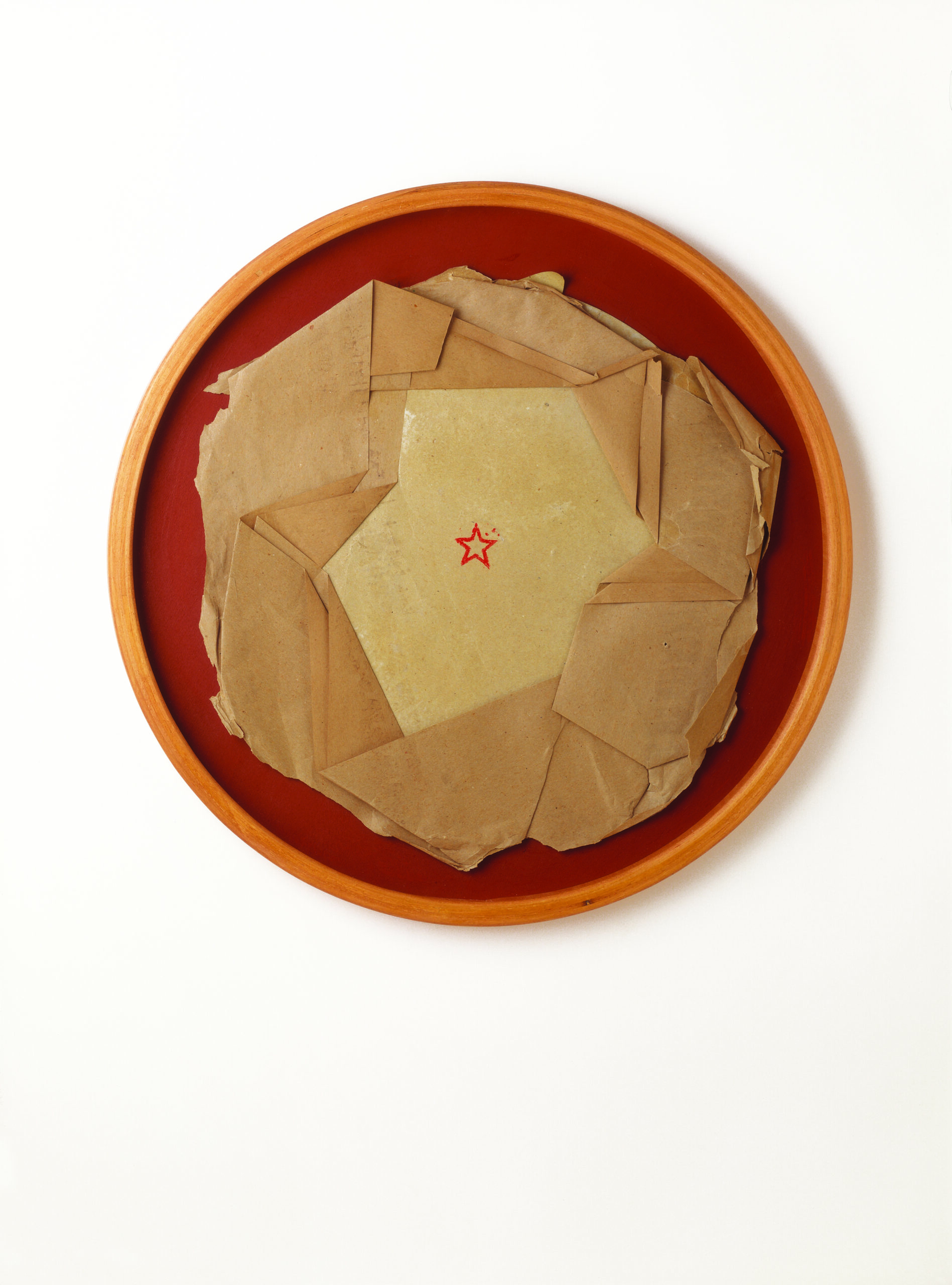
Erinna König, Ende der Rolle, 6 von 20, 1990
Interested in modern media, Erinna König helped initiate and became co-founder of the first photography and film class under Ole John Povlsen in 1974. König’s final project at the academy was the first film ever created at the art academy: In collaboration with Ole John Povlsen and the film class her masterpiece was a 45 min 16mm film analysing German colonial history from the industrial revolution to the 1st world war:
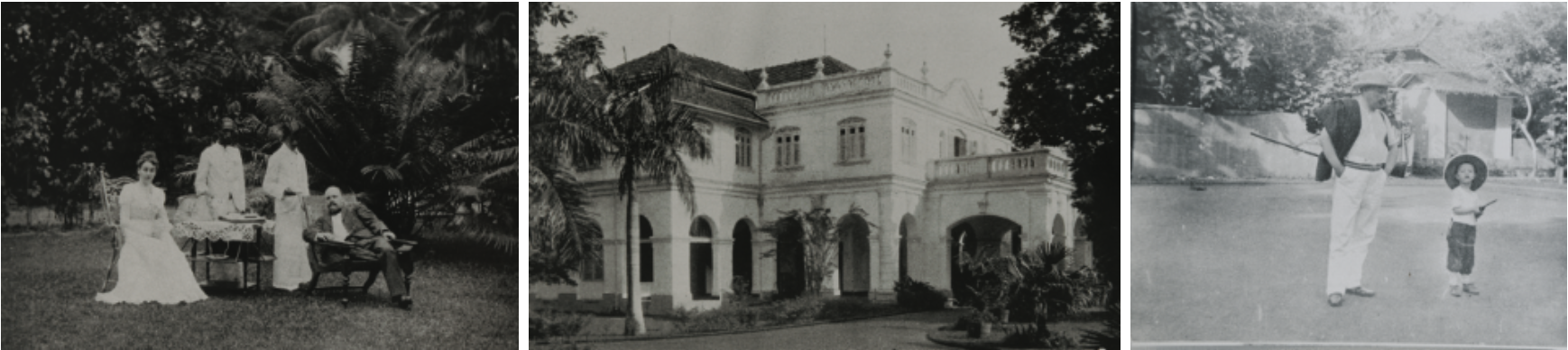
‘Oskar B. or The Imperialism’ follows family ‘B’ through time via their family chronicles and the archives of the Freudenberg, Colombo, Sri Lanka where Oskar B. would become Freudenberg’s right hand managing the coffee plantations. Digging deep into the history, horrors and absurdity of colonisation, König lays bare some of the roots of WWI, therefore WWII, and the situation we face today. The film was part of the German entry of the film festival Dortmund in 1974, then screened again in 1991 as part of the Kunstmuseum exhibition “Brennpunkt 2, the 70s” where the original film in its can was exhibited as prized artwork itself, before being unearthed, digitised and shown 2024 and at the EK STUDIO exhibition “Chromatics.”
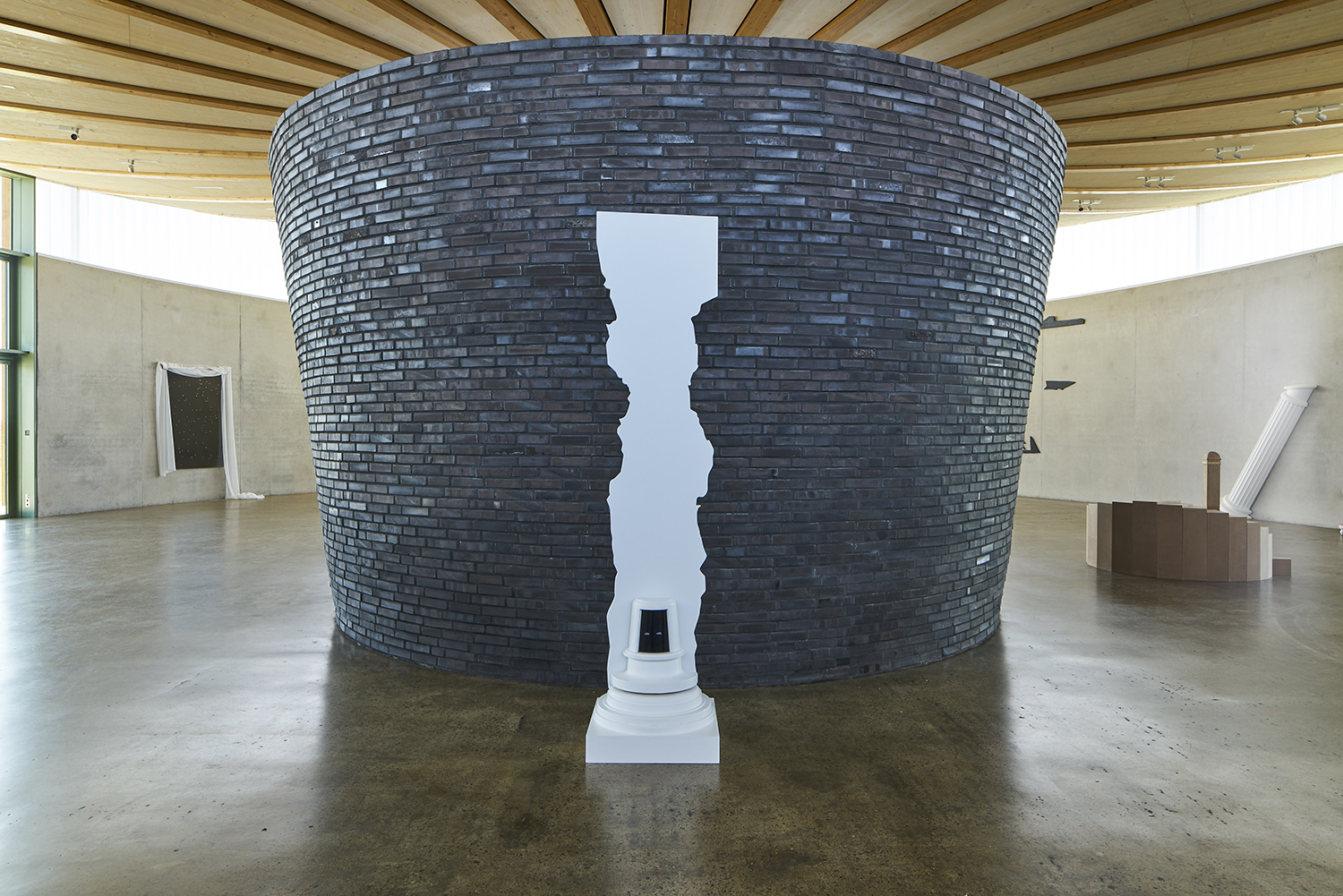
Erinna Thomas Schütte Stiftung Brettersäule photo Dejan Saric
Erinna König, Ende der Rolle, 6 von 20, 1990
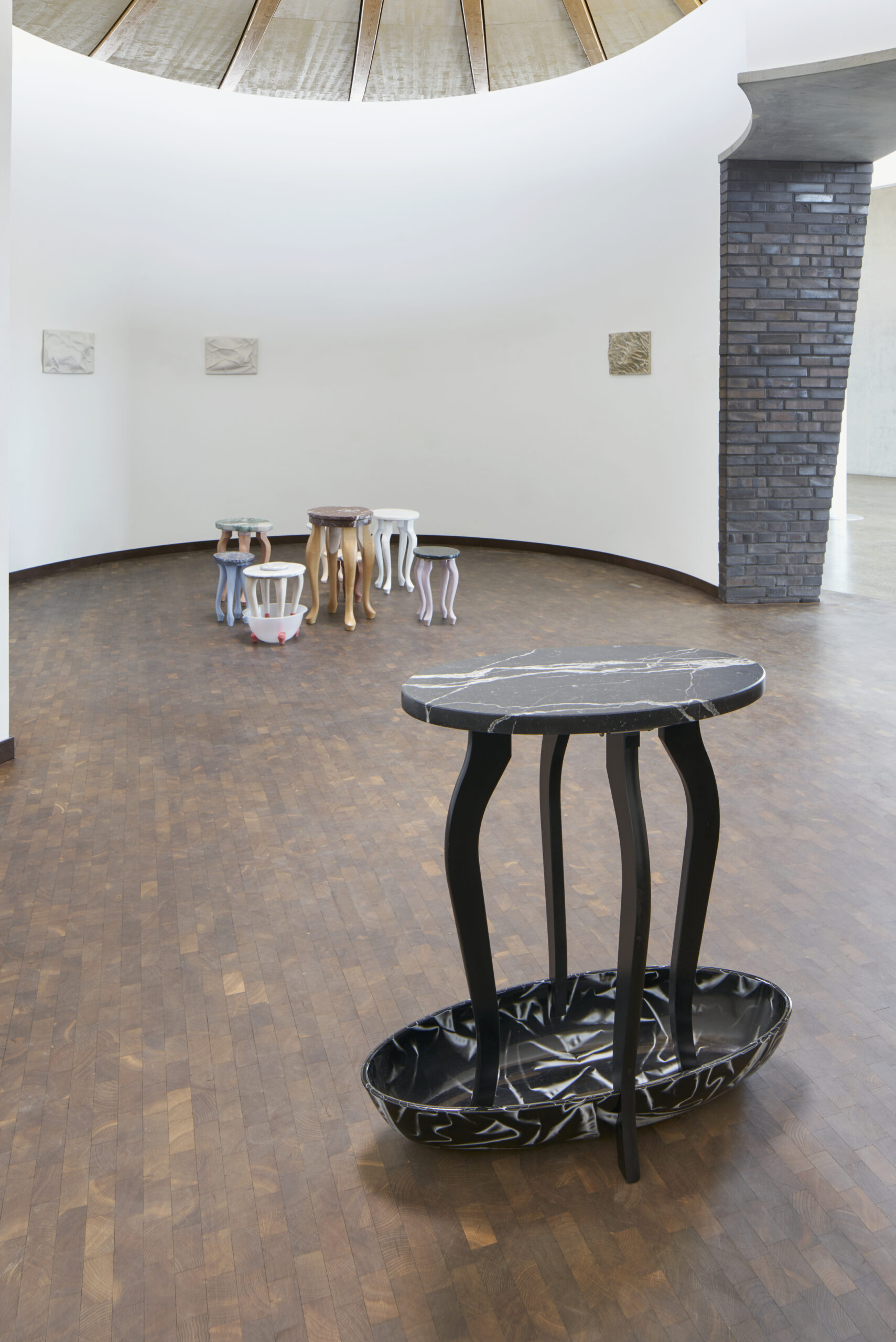
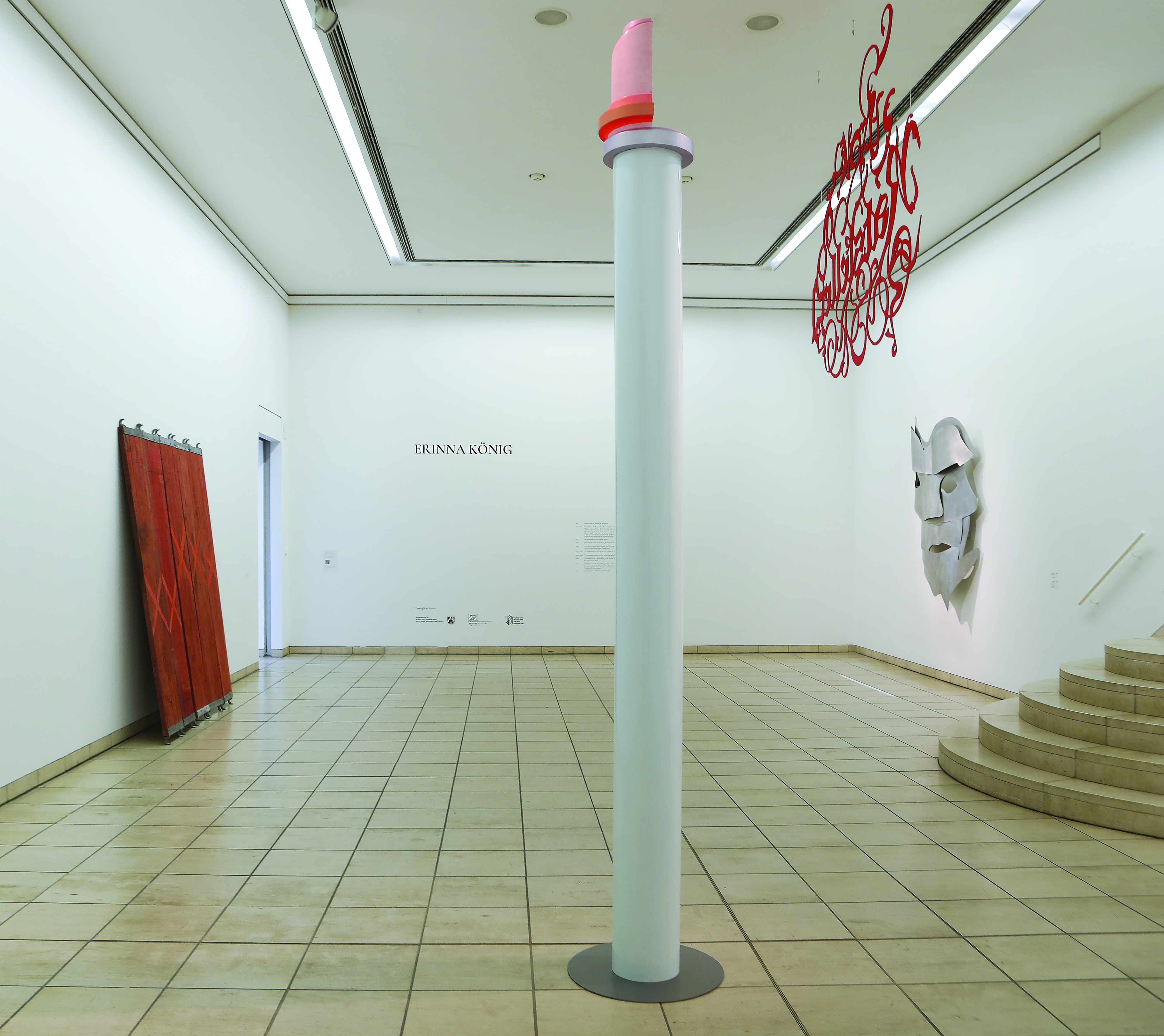
Erinna König, Thomas Schütte Stiftung Skulpturenhalle Neuss, Room view Dejan Saric
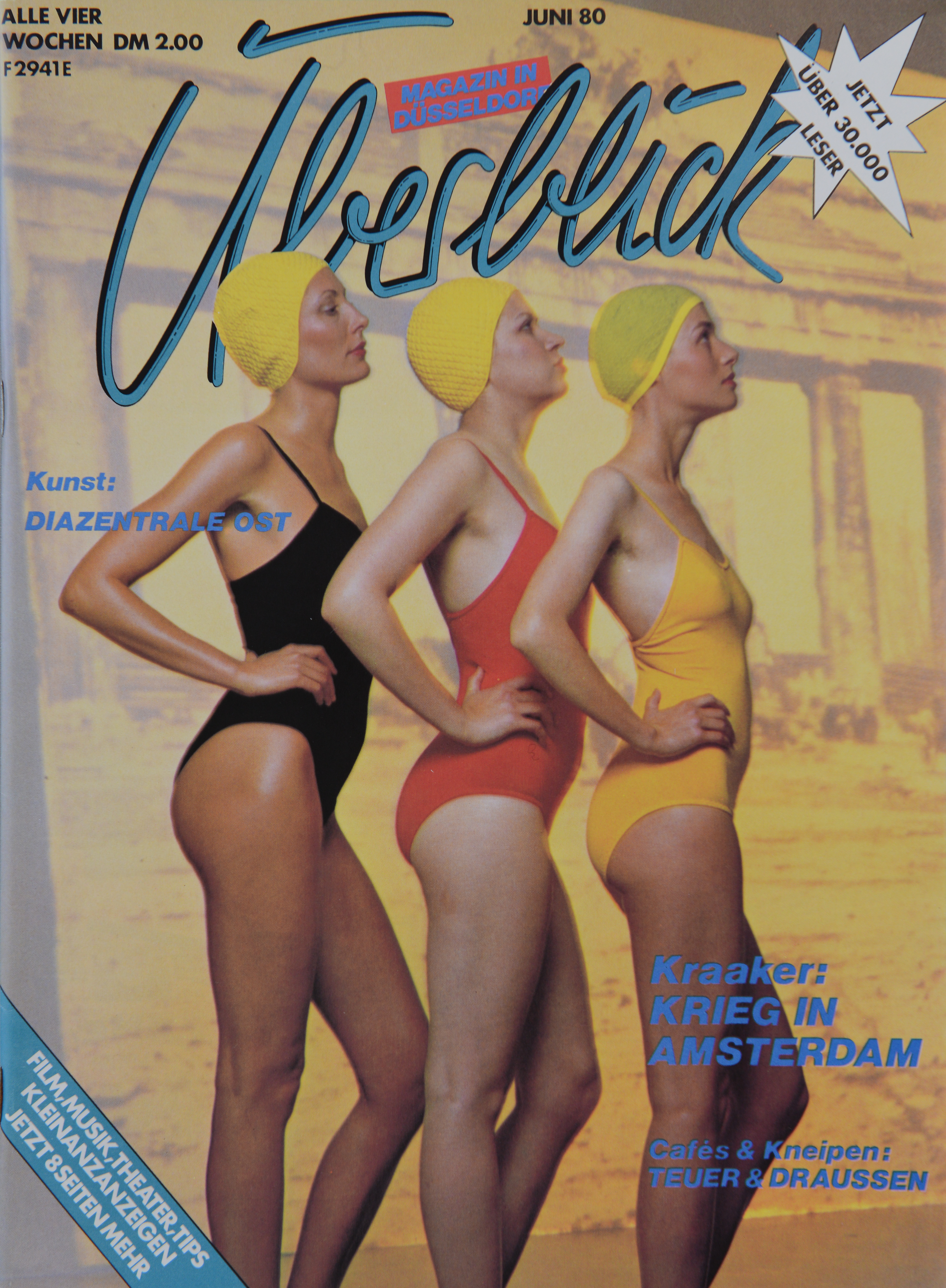
Überblick Cover Diazentrale 1980 HR
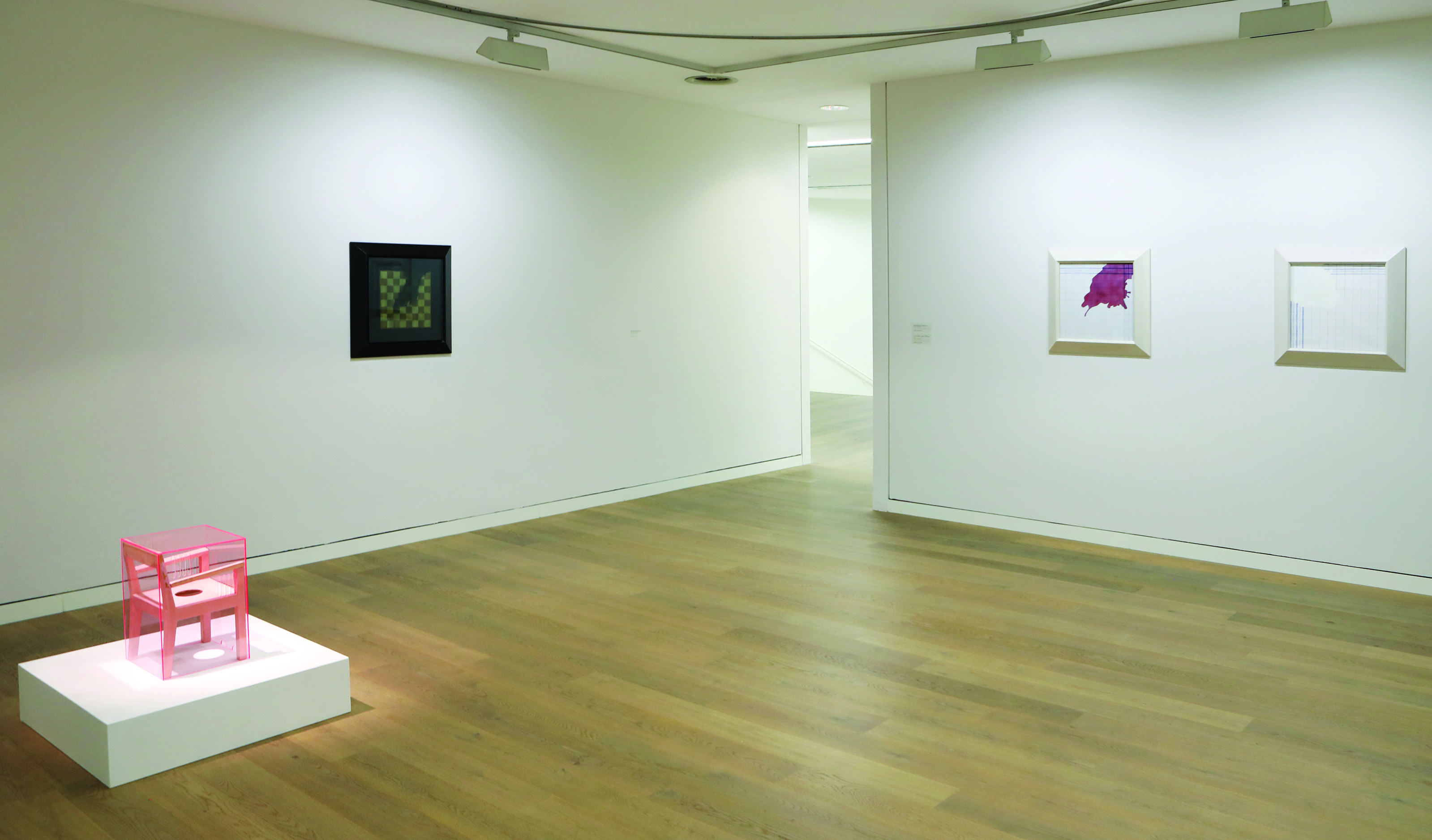
Ichts, romview Erinna König Retrospective, von der Heydt Museum, photo Tomek Sierek 2023-24
Ichts, romview Erinna König Retrospective, von der Heydt Museum 2023-24, photo Tomek Sierek
Erinna König’s personal body of art photography primarily centres around the topic of self portraiture. In 1978 Erinna König however teamed up with Bärbel Freund und Iris Teriet for a special group project which took two years to realize. Together they created the brilliant concept ‘Diazentrale-Ost’: an imaginary media agency selling prepackaged boxes of slides (for the then popular ‘slideshow evenings for couples and friends’). The trio took 6000 photos (slides) in parallel from East and West Berlin television, as at the time it was possible to receive DDR broadcasts in West Berlin. However, the main focus were not the slides (presented on tube TVs), but the marketing campaign of the media agency (Diazentrale- Ost). As publicity stunt the three ladies took on varying roles (female clichés) from nuns to prostitutes, posing in underwear, as mothers, brides or housewives, air hostesses or concert musicians, with the photos taken by Petra Kleinsorg and Rolf Appelbaum. Landing their first solo exhibition at Denise Rene / Hans Meyer in 1980, the magazine’s invitation poster (cover and centerfold poster in the popular city magazine “Überblick”), featured the trio in black/red/gold bathing suits in front of the Brandenburger Gate. The slideshow addressed the East / West division of Germany at the time and the different versions of reality proposed for the two sides of the Berlin Wall. The project therefore questions existence as we perceive it on a personal and societal level. Simulteneously it presented a subversive take on consumerism and the widely used technique of distraction — with the media campaign garnering far more attention than the actual product (the box sets of slides). Point proven: “Diazentrale-Ost” was a stunning success and the art publisher Walther König issued a popular postcard edition of four of the campaign images.
In Kenya in 1982 when collaborating on a television shoot, König remembered and reconnected with her early work at the art academy. Finding herself magically attracted to things that no one else noticed or cared for, König picked up discarded fabric roll cores and started transforming them. This first such work “Rote Zeichen/Durststrecke” (Red Science Dry Spell, 1982), is now in the Ruth and Marvin Sackner Collection, Ohio.
(1) Conversation with Petra Richter, 20 April 1994. Mit, neben, gegen — Die Schüler von Joseph Beuys;
With, beside, against — The Pupils of Joseph Beuys, p.170, published by Richter Verlag Düsseldorf © 2000 Petra Richter
König’s work playfully thrives on the paradox and hidden meanings, which she invites the viewer to uncover in a game of association through own personal and social codes. Sophisticated cultural clues offset her tuning into the inner child: a child who seeks answers in a world not made for children, where questions are repeated yet remain unanswered. Mystery perpetuates and the quest never ends.
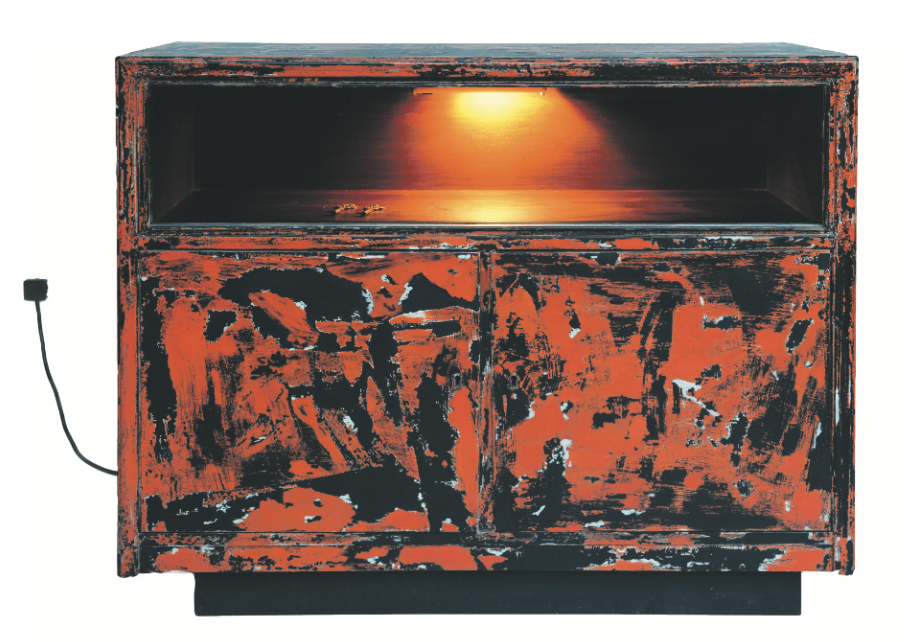
The work ‘sideboard property (sunset), 1984’ is a telling example: a modern home furniture staple in the 50s, has lost all its unobtrusive discreteness by being wildly covered in black and red paint. Furthermore, a two-way mirror across the upper display shelf bars the view. The two doors of the cabinet that are locked. Only when trying hard, one can glance behind the spy mirror and make out the keys enclosed on the shelf, dimly lit by a hindlight. Teasing, mocking they lie, unreachable. The sideboard representing our ‘self’ — if you could get to the keys, would you actually want to know the secret behind the locked doors? Or was it you who tucked them safely away in the first place?
With Erinna König, it’s not really about the answers that we as visitors inevitably feel compelled to seek, but about the questions — the dynamic process of engaging with the work and our response to the embedded hints and triggers. The journey is the destination. —Uscha Pohl
“[…] König’s sculptural works have a painterly quality, and what appears painterly turns out to be tangible. There is always an object from which the artist thinks and creates. Recurring elements appear in the exhibition: three columns, three calligraphies, and three masks, which, due to their different shapes, communicate with each other across the space {…]
In Erinna König’s works, there is no clear story being told, no mystery to be solved. The found objects form an ambiguous image, a metaphor in which each part fits into a previously unseen whole.”
Dieter Schwarz, Erinna König, Thomas Schütte Foundation, Skulpturenhalle Neuss, 2020, excerpt
(1) Conversation with Petra Richter, 20 April 1994. Mit, neben, gegen — Die Schüler von Joseph Beuys;
With, beside, against — The Pupils of Joseph Beuys, p.170, published by Richter Verlag Düsseldorf © 2000 Petra Richter